16 questions of the official theory exam question bank of the Province of Buenos Aires, translated into English, with the Spanish original under each line and the correct answer marked. The exam itself is in Spanish.
1. What should you do if your vehicle breaks down in a tunnel?¿Qué debe hacer usted si su vehículo queda inmovilizado en un túnel?
ALock the vehicle and leave the tunnel as soon as possible.Dejar el vehículo cerrado y salir del túnel cuanto antes.
BTurn off all lights if the tunnel is lit and call for help on your mobile phone.Apagar todas las luces si el túnel está iluminado y solicitar auxilio a través del teléfono móvil.
CTurn off the engine, set up the warning triangles, keep the position lights and hazard lights on, and call the assistance number.Apagar el motor, colocar las balizas portátiles, mantener encendidas las luces de posición e intermitentes y llamar al número de asistencia.Correct answer
Classes A and B. Official question bank, p. 18.
2. If you are involved in a road crash on an avenue, it is advisable to mark the area so that no further incidents occur.En caso de participar de un siniestro vial en una avenida, es recomendable señalizar la zona para que no se produzcan más incidentes viales.
ATrue.Verdadero.Correct answer
BFalse.Falso.
Classes A and B. Official question bank, p. 18.
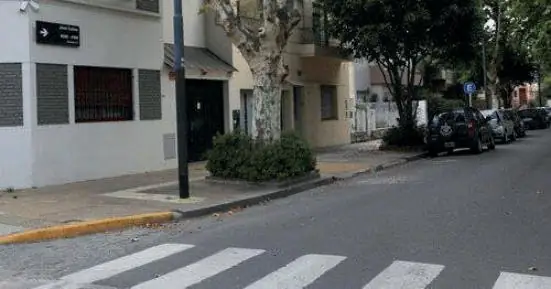
3. In the event of a road crash on this type of street, how is it advisable to mark the area around the stopped vehicle?En caso de un siniestro vial en este tipo de calle, ¿cómo es recomendable señalizar la zona del vehículo inmovilizado?
ATurn on the low beams and, if possible, place warning triangles in front of and behind it.Se deben encender las luces bajas y, en lo posible, colocar balizas portátiles delante y detrás del mismo.
BTurn on the high beams and, if possible, place warning triangles behind it.Se deben encender las luces altas y, en lo posible, colocar balizas portátiles detrás del mismo.
CTurn on the hazard lights and, if possible, place warning triangles on the side traffic is coming from, at a suitable distance from the vehicle.Se deben encender las balizas y, en lo posible, colocar balizas portátiles del lado de donde provienen los vehículos a una distancia adecuada del vehículo.Correct answer
Classes A and B. Official question bank, p. 19.
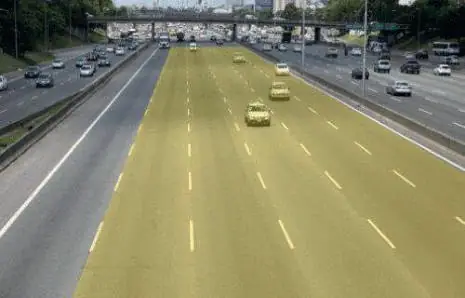
4. If a vehicle is stranded in the marked lanes of this road because of a crash or a mechanical failure, what is advisable?En el caso de que un vehículo quede inmovilizado por un siniestro vial o desperfecto mecánico en los carriles marcados de esta vía, ¿qué es recomendable hacer?
ASet up the warning triangles, take shelter behind a guardrail if there is one, and call the motorway's emergency number.Colocar las balizas portátiles, ponerse a resguardo detrás de una defensa si las hubiere y llamar al número de emergencia de la Autopista.
BGet out of the vehicle wearing a reflective vest to signal to other vehicles, and call the motorway's emergency number.Descender del vehículo usando un chaleco reflectante para hacer señas al resto de los vehículos y llamar al número de emergencia de la Autopista.
CStay inside the vehicle with your seat belt fastened, turn on the hazard lights and call the motorway's emergency number.Permanecer dentro del vehículo con el cinturón de seguridad abrochado, encender las balizas y llamar al número de emergencia de la Autopista.Correct answer
Classes A and B. Official question bank, p. 19.
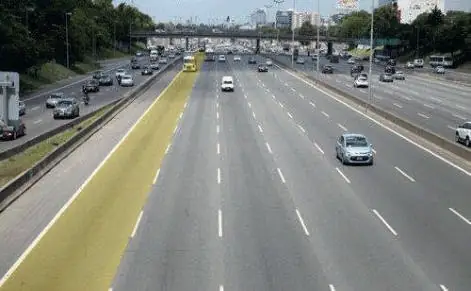
5. In the event of a crash or mechanical failure, what is advisable when the vehicle is stranded in the indicated area?En caso de un siniestro vial o desperfecto mecánico, ¿qué es recomendable hacer cuando el vehículo queda inmovilizado en el sector señalado?
ATurn on the hazard lights, set up the warning triangles and call the motorway's emergency number.Encender las luces intermitentes, colocar las balizas portátiles y llamar al número de emergencia de la Autopista.
BGet out of the vehicle wearing a reflective vest and take shelter behind a guardrail if there is one.Descender del vehículo usando un chaleco reflectante y ponerse a resguardo detrás de una defensa si las hubiere.
CBoth answers, A and B, are correct.Ambas respuestas, la A y la B, son correctas.Correct answer
Classes A and B. Official question bank, p. 20.
6. In court proceedings over a road crash, if you are summoned as a witness, you are not obliged to appear and testify at the prosecutor's office.En un procedimiento judicial de un siniestro vial, al ser convocados en carácter de testigo, no es obligatorio presentarse a declarar en la Fiscalía correspondiente.
ATrue.Verdadero.
BFalse.Falso.Correct answer
Classes A and B. Official question bank, p. 20.
7. A person who flees a road crash leaving someone injured can be tried for the crime of abandoning a person.La persona que se da a la fuga en un siniestro vial, dejando a alguien herido, puede ser juzgada por el delito de abandono de persona.
ATrue.Verdadero.Correct answer
BFalse.Falso.
Classes A and B. Official question bank, p. 20.
8. If you are involved in a road crash, how long do you have to notify the vehicle's insurance company?En caso de participar de un siniestro vial, ¿de cuánto tiempo se dispone para dar aviso sobre el hecho a la compañía aseguradora del vehículo?
A24 hours.24 horas.
B48 hours.48 horas.
C72 hours.72 horas.Correct answer
Classes A and B. Official question bank, p. 20.
9. If you are involved in a road crash in which people were injured, the police who arrive at the scene will preserve it, enable emergency services to treat the injured, and secure the vehicles and other evidence so that the case can be properly resolved.En caso de participar en un siniestro vial, en el que resultaron personas heridas, el personal policial que acuda al lugar se encargará de preservar la escena del hecho, brindando los medios para que los servicios de emergencia atiendan a los heridos y resguardando los vehículos y otras pruebas del incidente para una adecuada resolución del caso.
ATrue.Verdadero.Correct answer
BFalse.Falso.
Classes A and B. Official question bank, p. 21.
10. If you are involved in a road crash, what is advisable as the first step?En caso de participar en un siniestro vial, ¿qué es recomendable hacer como primer paso?
AStop immediately and stay at the scene.Detenerse inmediatamente y permanecer en el lugar del hecho.Correct answer
BDrive to the nearest police station.Conducir hasta la comisaría más cercana.
CCall 911 and continue your trip.Llamar al 911 y continuar el viaje.
Classes A and B. Official question bank, p. 21.
11. In the event of a crash, the recommended order of action is…En caso de siniestro, el orden de actuación recomendado es…
AAlert - Help - Protect.Alertar - Socorrer - Proteger.
12. What obligations does the law impose on a driver involved in a crash?¿Qué obligaciones impone la ley a aquel conductor que participe de un siniestro?
AStop immediately, call for help for any victims and cooperate to prevent further harm to traffic.Detenerse inmediatamente, solicitar auxilio para atender a las víctimas si las hubiera y brindar su colaboración para evitar mayores daños para la circulación.
BGive their personal, vehicle, driver's license and mandatory insurance details to the others involved and to the authorities at the scene.Suministrar sus datos personales, del vehículo, de la licencia de conducir y del seguro obligatorio a los demás siniestrados y a la autoridad interviniente.
CBoth answers, A and B, are correct.Ambas respuestas, A y B, son correctas.Correct answer
Classes A and B. Official question bank, p. 21.
13. Who bears civil liability for a traffic incident caused by a minor who holds a driver's license?¿Quién es el responsable civil por un incidente de tránsito producido por un menor de edad poseedor de una licencia de conducir?
AWhoever signed the authorization to obtain the license.El que firmó la autorización para obtener la licencia.Correct answer
BWhoever is with them.El que lo acompaña.
CWhoever authorized them to use the vehicle.El que le autorizó el uso del vehículo.
Classes A and B. Official question bank, p. 21.
14. In civil liability matters, what is considered the deciding factor for filing a lawsuit?En materia de Responsabilidad Civil, ¿qué es lo que se considera como factor determinante para dar inicio a una demanda?
AThe intent behind the harmful conduct.La intención de la conducta dañosa.
BThe existence of actual damage, affecting some individual, caused as a result of the incidentLa existencia de un daño real, que afecte a algún particular, provocado como consecuencia del incidenteCorrect answer
CThe record of the person who caused the damage.Los antecedentes de la persona que provoca el daño.
Classes A and B. Official question bank, p. 22.
15. In a traffic incident, can the criminal liability of a vehicle's driver be transferred to its owner?Frente a un incidente de tránsito, ¿puede transferirse la Responsabilidad Penal del conductor de un vehículo al dueño del mismo?
ANo, because criminal liability cannot be transferred.No, porque la responsabilidad penal es intransferible.Correct answer
BYes. Moreover, it can be transferred from the owner to the insurance company.Sí. Además, del dueño también puede transferirse a la Compañía de Seguros.
CThe judge will decide, based on the seriousness of the incident and its consequences.Lo resolverá el Juez, en función de la gravedad del incidente y sus consecuencias.
Classes A and B. Official question bank, p. 22.
16. In a traffic incident, what does it mean for the driver to be held liable for negligence?En un incidente de tránsito, ¿qué significa que el conductor sea considerado responsable por negligencia?
AThat they did not respond properly to a traffic situation due to lack of driving practice.Que no ha respondido adecuadamente a una circunstancia del tránsito por falta de práctica en la conducción.
BThat they did something with their vehicle that the rules of prudence say not to do, that is, they acted dangerously.Que ha realizado un acto con su vehículo que las reglas de prudencia indican no hacer, o sea, que ha actuado peligrosamente.
CThat they did not act in accordance with the requirements of the law.Que ha actuado no conforme a las exigencias de la Ley.Correct answer