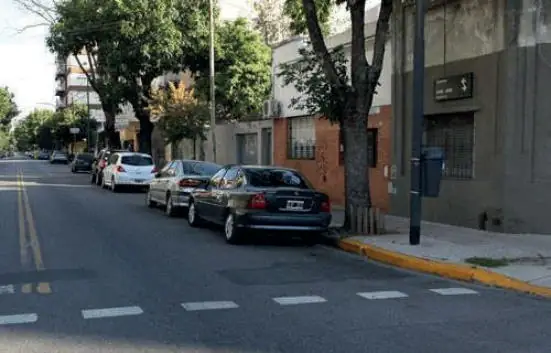
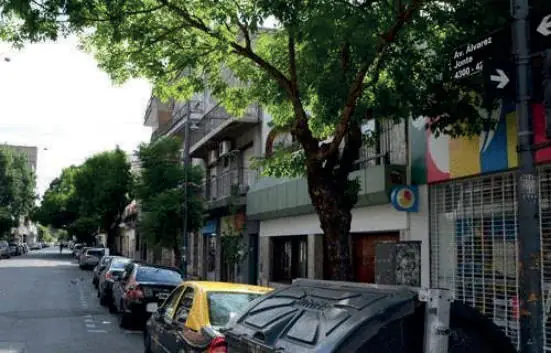
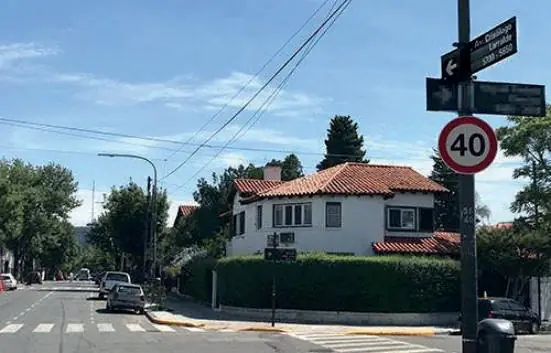
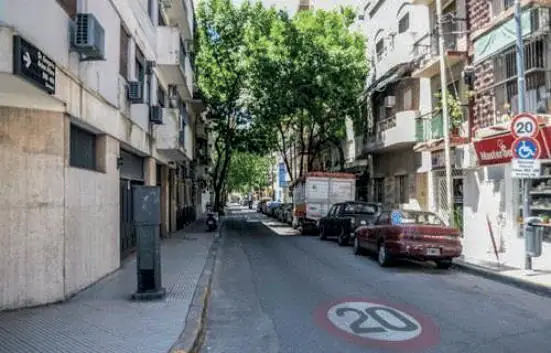
121 questions of the official theory exam question bank of the Province of Buenos Aires, translated into English, with the Spanish original under each line and the correct answer marked. The exam itself is in Spanish.
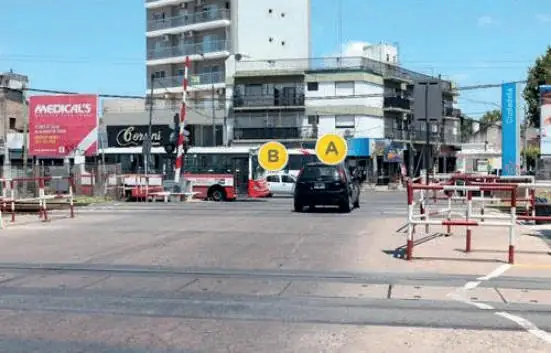
1. At a crossing of two streets without traffic lights, in the following situation, who has the right of way?En un cruce de dos calles sin semáforo, frente a la siguiente situación, ¿quién tiene prioridad de paso?
AVehicle A, since it is coming from the rightEl vehículo A, ya que está circulando por la derecha
BVehicles B, since there are several of them on that street.Los vehículos B, ya que son varios los que circulan por esa calle.
CVehicle A, since it is leaving the level crossing.El vehículo A, ya que está saliendo del paso a nivel ferroviario.Correct answer
Classes A and B. Official question bank, p. 101.
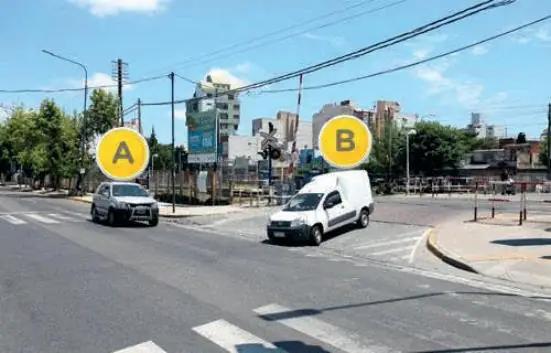
2. At a crossing of two streets without traffic lights, in the following situation, who has the right of way?En un cruce de dos calles sin semáforo, frente a la siguiente situación, ¿quién tiene prioridad de paso?
AVehicle A.El vehículo A.
BVehicle B.El vehículo B.Correct answer
Classes A and B. Official question bank, p. 102.
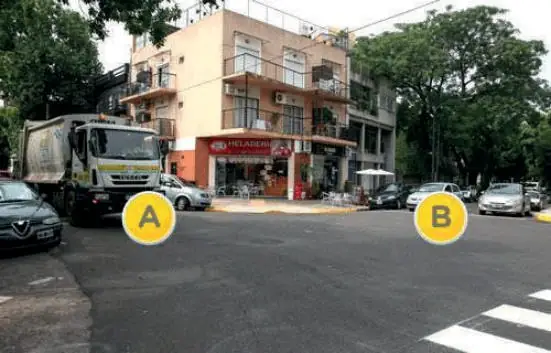
3. Who has the right of way at the crossing of these two streets?¿Quién tiene prioridad de paso en el cruce de estas dos calles?
AThe vehicles on street A.Los vehículos que circulan por la calle A.Correct answer
BThe vehicles on street B.Los vehículos que circulan por la calle B.
Classes A and B. Official question bank, p. 103.
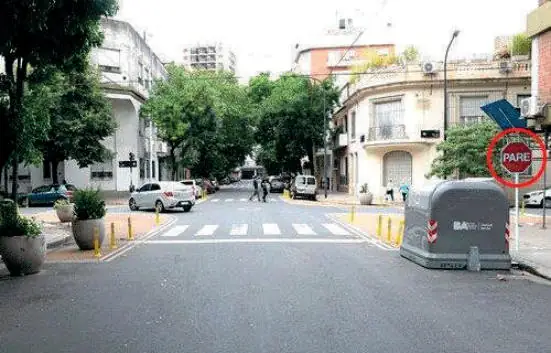
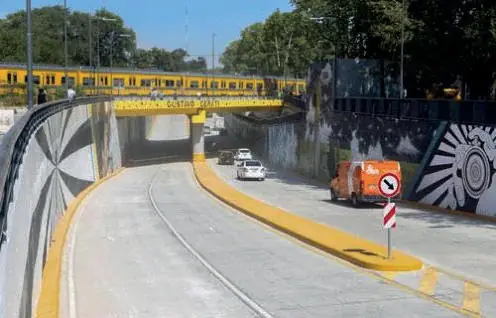
4. When driving a vehicle and reaching this intersection, how should you act at this sign?Al conducir un vehículo y llegar a esta intersección, ¿cómo debe proceder frente a esta señal?
ASlow down a little and check that no vehicles are approaching on the road you are about to join.Disminuir un poco la velocidad y mirar que no se acerquen vehículos por la vía a la que se va a incorporar.
BSlow down and stop the vehicle before the pedestrian crossing.Reducir la velocidad y detener el vehículo antes de la senda peatonal.Correct answer
CGo ahead.Avanzar.
Classes A and B. Official question bank, p. 104.
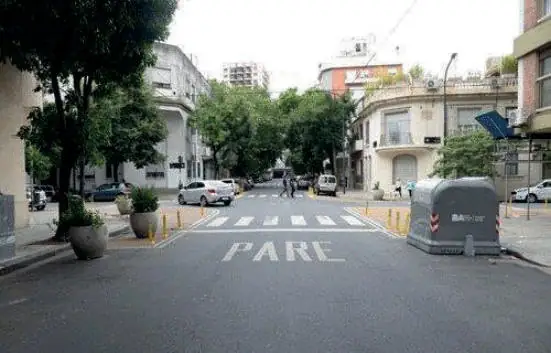
5. As the driver of a vehicle, how should you act at this road marking?Como conductor de un vehículo, ¿cómo debe proceder frente a esta señal horizontal?
ASlow down a little and check that no vehicles are approaching on the road you are about to join.Disminuir un poco la velocidad y mirar que no se acerquen vehículos por la vía a la que se va a incorporar.
BSlow down and stop the vehicle before the pedestrian crossing.Reducir la velocidad y detener el vehículo antes de la senda peatonal.Correct answer
CGo ahead.Avanzar.
Classes A and B. Official question bank, p. 104.
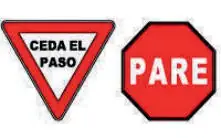
6. These signs are the only ones indicating that you lose the right of way at an intersection without traffic lights.Estas señales son las únicas que indican que se pierde la prioridad de paso en una bocacalle sin semáforo.
ATrue.Verdadero.Correct answer
BFalse.Falso.
Classes A and B. Official question bank, p. 105.
7. As a general rule, who has the right of way at an intersection without traffic lights?Como norma de carácter general, ¿quién tiene prioridad de paso en una encrucijada sin semáforos?
APassenger transport vehicles.Los vehículos de transporte de pasajero.
BThe smaller vehicle.El vehículo de menor tamaño.
CThe vehicle coming from the right.El vehículo que se presenta por el lado derecho.Correct answer
Classes A and B. Official question bank, p. 105.
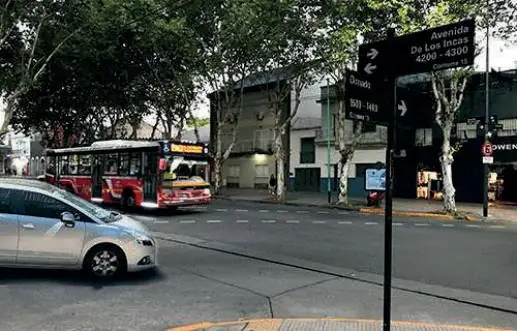
8. In the following situation, who has the right of way?En la siguiente situación, ¿a quién le corresponde la prioridad de paso?
AThe car.Al automóvil.
BThe city bus.Al colectivo.Correct answer
CIt makes no difference.Es indistinto.
Classes A and B. Official question bank, p. 105.
9. With the road obstructed like this, what should the driver of the indicated vehicle do?Frente a esta situación de obstrucción de vía, ¿qué debe hacer el conductor del vehículo señalado?
AGive way to the vehicle coming in the opposite direction.Debe ceder el paso al vehículo que circula en el sentido contrario.Correct answer
BThey have the right of way over the other vehicle.Tiene prioridad de paso sobre el otro vehículo.
CThe rules do not set any right of way in this situation.La normativa no establece prioridad de paso ante esta situación.
Classes A and B. Official question bank, p. 106.
10. Who has the right of way at a roundabout?¿Quién tiene prioridad de paso en una rotonda?
AThe vehicle coming from the right.El vehículo que circule por la derecha.
BThe vehicle trying to enter the roundabout.El vehículo que pretende acceder a la rotonda.
CThe vehicle already on the circular roadway.El vehículo que se encuentra dentro de la calzada circular.Correct answer
Classes A and B. Official question bank, p. 107.
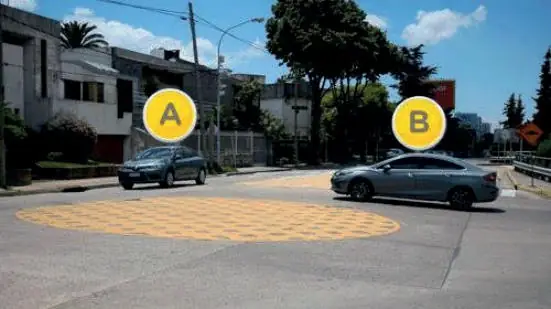
11. In this situation, where there is a circular roadway, who has the right of way?En esta situación, donde hay una calzada circular, ¿quién tiene la prioridad de paso?
AVehicle A.El vehículo A.
BVehicle B.El vehículo B.Correct answer
CIt makes no difference.Es indistinto.
Classes A and B. Official question bank, p. 107.
12. As a general rule, on a two-way road with a steep slope that is too narrow for two vehicles to pass each other, who has the right of way?Como norma general, en una arteria de doble circulación, con pendiente pronunciada y con un ancho que no permite la circulación simultánea de dos vehículos, ¿quién tiene la prioridad de paso?
AThe vehicle going down.El vehículo que desciende.
BThe vehicle going up.El vehículo que asciende.Correct answer
CThere is no priority; either of them.No hay prioridad, cualquiera de ellos.
Classes A and B. Official question bank, p. 108.
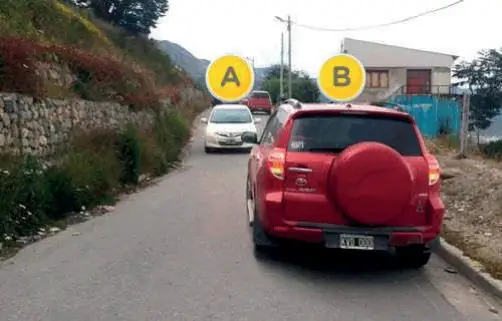
13. On this narrow slope, which of the two vehicles has the right of way?En esta pendiente estrecha, ¿cuál de los dos vehículos tiene prioridad de paso?
AVehicle A.El vehículo A.
BVehicle B.El vehículo B.Correct answer
Classes A and B. Official question bank, p. 108.
14. When must you give way to vehicles that want to pull into traffic from where they were parked or from a garage?¿Cuándo se debe ceder el paso a los vehículos que desean incorporarse al tránsito desde el lugar donde estaban estacionados o desde un garaje?
AAlways, whatever the traffic is like.Siempre, independientemente de cómo se encuentre el tránsito vehicular.
BWhen traffic is stopped for any reason.Cuando el tránsito se encuentra interrumpido por cualquier razón.Correct answer
CNever, whatever the traffic is like.Nunca, independientemente de cómo se encuentre el tránsito vehicular.
Classes A and B. Official question bank, p. 109.
15. The indicated vehicle wants to pull into traffic. Does it have the right of way over the other vehicles moving on this road?El vehículo señalizado quiere incorporarse al tránsito, ¿tiene prioridad de paso sobre los otros vehículos que están circulando por esta arteria?
ANo, because the vehicles on the road it wants to enter are moving.No, porque los vehículos de la arteria, a la que se pretende ingresar, están circulando.Correct answer
BYes, because it is on the right.Sí, porque se encuentra a la derecha.
CYes, because it signaled its maneuver.Sí, porque señalizó su maniobra.
Classes A and B. Official question bank, p. 109.
16. The indicated vehicle wants to pull into traffic. Does it have the right of way over the other vehicles stopped on the road?El vehículo señalizado quiere incorporarse al tránsito, ¿tiene prioridad de paso sobre los otros vehículos que están detenidos en la arteria?
ANo. The other vehicles have priority, whether they are stopped or moving.No. La prioridad es de los otros vehículos, independientemente si están detenidos o circulando.
BYes, because traffic is stopped and they must give way to it.Sí, porque se encuentra el tránsito detenido y deben cederle el paso.Correct answer
CNo. The law says nothing about it; it only covers right of way at intersections without traffic lights.No. La Ley no menciona nada al respecto, sólo se expresa sobre las prioridades en intersecciones no semaforizadas.
Classes A and B. Official question bank, p. 109.
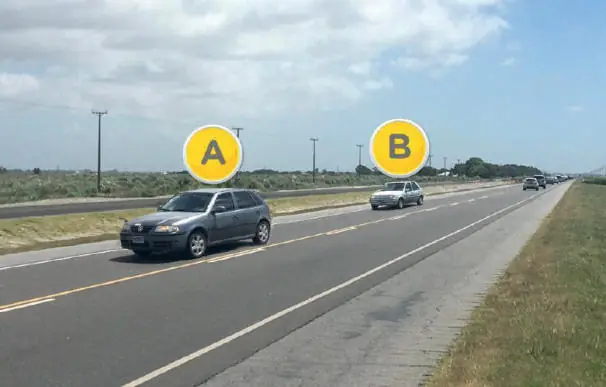
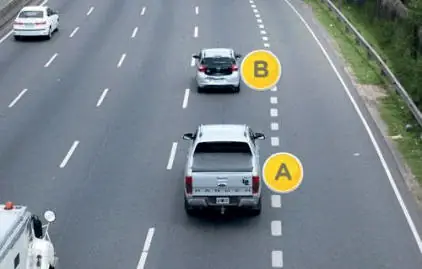
17. In the following situation, may vehicle B overtake vehicle A?En la siguiente situación, ¿el vehículo B puede sobrepasar al vehículo A?
AYes, unless a vehicle is approaching in the opposite direction.Sí, salvo que se acerque un vehículo en el sentido contrario.
BNo, because the road marking prohibits it.No, ya que está prohibido por la demarcación horizontal.Correct answer
CYes, using the corresponding light signals and if the oncoming vehicle is far away.Sí, haciendo las señales de luces correspondientes y si el vehículo que circula en sentido contrario está lejos.
Classes A and B. Official question bank, p. 110.
18. Which of the following vehicles are NOT committing an offense?¿Cuáles de los siguientes vehículos NO se encuentran en infracción?
AVehicles A and B.Los vehículos A y B.
BVehicles A and C.Los vehículos A y C.
CVehicles B and C.Los vehículos B y C.Correct answer
Classes A and B. Official question bank, p. 111.
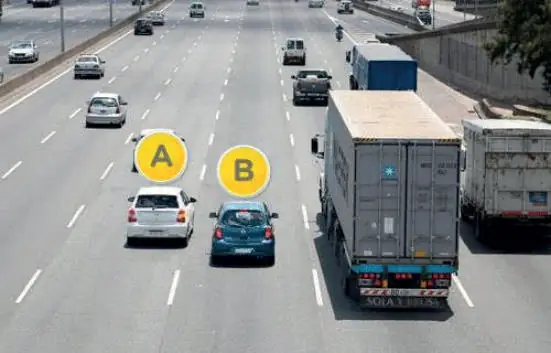
19. Vehicle A wants to change to the lane on its right. Which of the two vehicles has priority?El vehículo A pretende cambiar de carril hacia su derecha, ¿cuál de los dos vehículos tiene prioridad?
AVehicle A.El vehículo A.
BVehicle B.El vehículo B.Correct answer
Classes A and B. Official question bank, p. 111.
20. On this type of road, who has priority when you want to change lanes?En este tipo de arteria, ¿quién tiene prioridad cuando se desea realizar un cambio de carril?
AThe vehicle in the lane you want to move into.El vehículo que circula por el carril que se pretende ocupar.Correct answer
BThe vehicle changing lanes.El vehículo que realiza el cambio de carril.
CThe vehicle in the slower lane.El vehículo del carril más lento.
Classes A and B. Official question bank, p. 112.
21. After overtaking, you must...Es obligatorio al finalizar un adelantamiento...
AStay in the lane you are in, regardless of traffic flow.Permanecer en el carril ocupado, independientemente de la fluidez del tránsito.
BMove back into the right lane, if it is clear, gradually and without disrupting traffic flow.Incorporarse al carril derecho, si éste se encuentra libre, de forma gradual y sin obstaculizar la fluidez de tránsito.Correct answer
CMove back into the right lane, even if it means another vehicle has to change its speed.Incorporarse al carril derecho, aunque ésto implique que otro vehículo deba modificar su velocidad.
Classes A and B. Official question bank, p. 113.
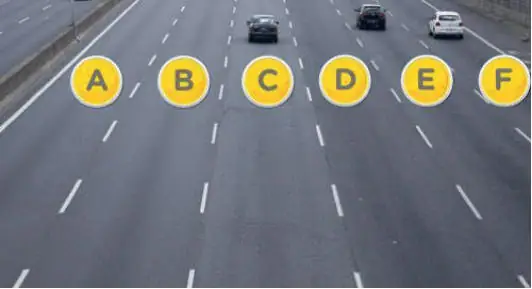
22. Which of these lanes is the so-called "overtaking lane"?¿Cuál de estos carriles es el llamado “”carril de sobrepaso””?
AAny of them.Cualquiera de ellos.
BOnly the lane marked A.Sólo el carril señalado como A.Correct answer
COnly the lane marked F.Sólo el carril señalado como F.
Classes A and B. Official question bank, p. 113.
23. A vehicle in the lane for slow traffic may not leave it to overtake another vehicle that is going even slower.El vehículo, que circula por el carril destinado al tránsito lento, no puede abandonarlo para sobrepasar a otro vehículo que transita más lento.
ATrue.Verdadero.
BFalse.Falso.Correct answer
Classes A and B. Official question bank, p. 113.
24. The driver of vehicle A wants to get back into the right lane quickly because they see danger ahead. What should the driver of vehicle B do?El conductor del vehículo A quiere volver rápidamente al carril derecho porque ve ante él una situación de peligro, ¿qué debe hacer el conductor del vehículo B?
ASpeed up so that A makes the maneuver behind them.Aumentar la velocidad para que realice la maniobra detrás suyo.
BSlow down to make it easier for A to get back into the lane.Reducir la velocidad para facilitarle el retorno al carril.Correct answer
CSound the horn and flash the headlights to tell A not to make the maneuver.Tocar bocina y hacer guiño de luces para indicarle que no debe realizar la maniobra.
Classes A and B. Official question bank, p. 113.
25. Overtaking is not allowed on this section of the roadEn este tramo de la vía no se puede realizar un sobrepaso
ATrue.Verdadero.Correct answer
BFalse.Falso.
Classes A and B. Official question bank, p. 114.
26. When you notice that you are about to be overtaken, what should you do?Al advertir que está por ser sobrepasado, ¿cuál debería ser su actitud?
ADrive on the shoulder.Circular por la banquina.
BKeep to the right side of the roadway and stay there. If necessary, slow down.Circular por la derecha de la calzada y mantenerse. En el caso de ser necesario, reducir la velocidad.Correct answer
CBoth answers, A and B, are correct.Ambas respuestas, A y B, son correctas.
Classes A and B. Official question bank, p. 114.
27. Is it allowed to overtake another vehicle at this place?¿Está permitido sobrepasar a otro vehículo en este lugar?
AYes, unless a sign indicates otherwise.Sí, salvo que haya una señal que indique lo contrario.
BNo, the regulations prohibit it.No, está prohibido por normativa.Correct answer
COnly if it does not hinder other vehicles.Sólo en el caso de que no perjudique la circulación de otros vehículos.
Classes A and B. Official question bank, p. 114.
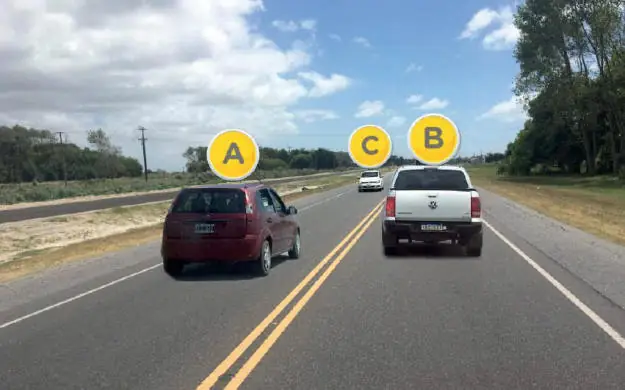
28. When several vehicles are traveling in a line, which of them has priority to overtake?Cuando varios vehículos circulan encolumnados, ¿cuál de ellos tiene prioridad para realizar el sobrepaso?
AThe one that tries first.El que lo intente primero.
BThe last in the line.El último de la fila.
CThe one closest to the vehicle to be overtaken.El que circula más próximo al vehículo que se desea sobrepasar.Correct answer
Classes A and B. Official question bank, p. 115.
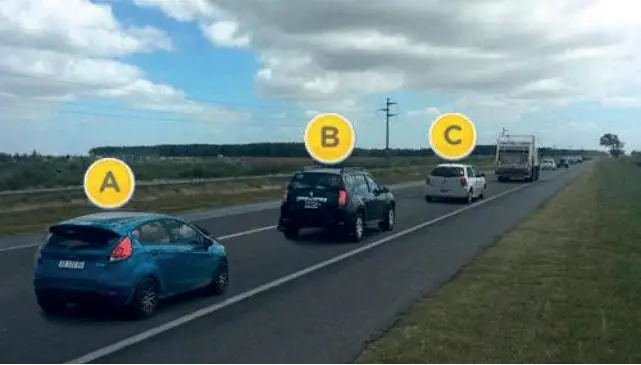
29. In this situation, who has priority to overtake the truck?En esta situación, ¿quién tiene prioridad para realizar el sobrepaso al camión?
AVehicle A.El vehículo A.
BVehicle B.El vehículo B.
CVehicle C.El vehículo C.Correct answer
Classes A and B. Official question bank, p. 115.
30. If, on reaching an intersection without traffic lights, the vehicle in front of you has stopped waiting to turn left, what should you do if you want to go straight ahead?Si al llegar a una intersección sin semáforos, se encuentra que el vehículo que está delante suyo está detenido esperando poder doblar hacia la izquierda, ¿qué debe hacer si ud. desea continuar en línea recta?
AOvertake it safely on the right, using the turn signal and checking the rear-view mirrors.Sobrepasarlo por la derecha de manera segura, colocando luz de giro y observando por los espejos retrovisores.Correct answer
BOvertake on the left, using the turn signal and checking the rear-view mirrors.Sobrepaso por la izquierda, colocando la luz de giro y observando por los espejos retrovisores.
CSound the horn to tell it to move on.Tocarle bocina para indicarle que debe seguir.
Classes A and B. Official question bank, p. 116.
31. May you cross the following road marking?¿Se puede traspasar la siguiente señal horizontal?
AYes, because it organizes the lanes and indicates that you may overtake another vehicle.Sí, porque ordena la circulación de carriles e indica que se puede sobrepasar a otro vehículo.Correct answer
BOnly when the road has two lanes in each direction.Sólo cuando la vía tiene dos carriles por sentido de circulación.
CNo, because it indicates no overtaking.No, porque indica prohibición de sobrepaso.
Classes A and B. Official question bank, p. 116.
32. As a general rule, where is overtaking a vehicle prohibited?Como norma general, ¿dónde está prohibido el sobrepaso de un vehículo?
AWhere the lanes are separated by a solid line.Donde la delimitación de carriles es de trazo continuo.
BOn bends, at intersections, at level crossings or on bridges.En curvas, encrucijadas, pasos a nivel o puentes.
CBoth answers, A and B, are correct.Ambas respuestas, A y B, son correctas.Correct answer
Classes A and B. Official question bank, p. 117.
33. In a tunnel with two-way traffic, is it allowed to overtake a vehicle?En un túnel, con ambos sentidos de circulación, ¿está permitido sobrepasar a un vehículo?
AYes, when there is no sign prohibiting it.Sí, cuando no haya señal que lo prohíba.
BNo, because the regulations prohibit it.No, ya que está prohibido por normativa.Correct answer
CYes, if there is enough visibility.Sí, si hay suficiente visibilidad.
Classes A and B. Official question bank, p. 117.
34. On a two-way road, what must you check before starting to overtake?En una vía de doble sentido de circulación, ¿qué deberá comprobar antes de iniciar un sobrepaso?
AThat the vehicle ahead does not have its turn signals on, and that no vehicle is coming in the opposite direction for as long as the overtaking lasts.Que el vehículo que antecede, no tenga las luces intermitentes encendidas y que ningún vehículo circule en sentido contrario, mientras dure la maniobra de sobrepaso.
BThat no other vehicle is overtaking.Que ningún otro vehículo esté realizando la maniobra de sobrepaso.
CBoth answers, A and B, are correct.Ambas respuestas, A y B, son correctas.Correct answer
Classes A and B. Official question bank, p. 117.
35. At this place, is it allowed to overtake another vehicle?En este lugar, ¿está permitido sobrepasar a otro vehículo?
AYes, unless a sign indicates otherwise.Sí, salvo que haya una señal que indique lo contrario.
BNo, the regulations prohibit it.No, está prohibido por normativa.Correct answer
COnly if it does not hinder other vehicles.Sólo si no se perjudica la circulación de otros vehículos.
Classes A and B. Official question bank, p. 118.
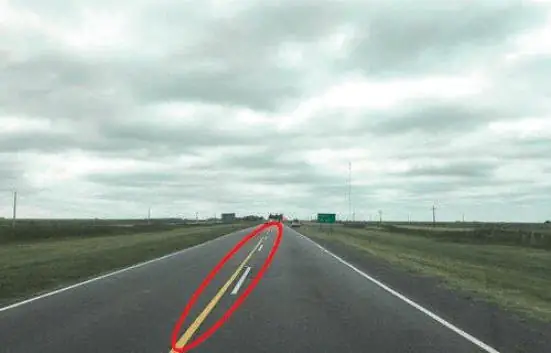
36. At the indicated center marking on the roadway, what should you do?Frente a la demarcación central de la calzada señalada, ¿cuál es la conducta a seguir?
AFollow the rule for the line closest to you: if it is solid, do not cross it; if it is broken, you may.Se debe respetar lo que rige con respecto a la línea más próxima; si es continua no traspasarla y si es discontinua está permitido hacerlo.Correct answer
BFollow the rule for the line closest to you: if it is broken, do not cross it; if it is solid, you may.Se debe respetar lo que rige con respecto a la línea más próxima; si es discontinua no traspasarla y si es continua está permitido hacerlo.
CNeither of them may be crossed.No debe traspasarse ninguna de ellas.
Classes A and B. Official question bank, p. 118.
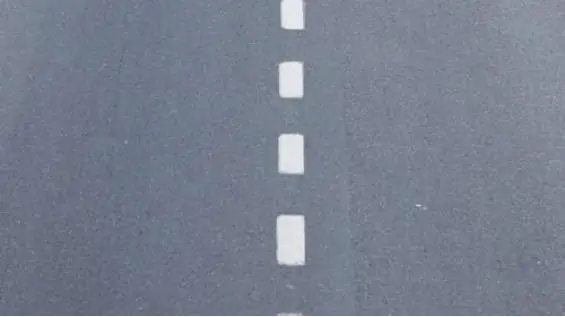
37. What does this yellow marking on the roadway indicate?¿Qué indica esta demarcación amarilla en la calzada?
AIt indicates that it may be crossed.Indica que se puede traspasar.
BIt divides opposite directions of traffic and indicates that crossing it is prohibited.Divide sentidos opuestos de circulación e indica que está prohibido traspasarla.Correct answer
CThat it is an area you may drive over.Que es una zona que se puede circular sobre ella.
Classes A and B. Official question bank, p. 119.
38. The overtaking lane on a motorway is for...El carril de sobrepaso en una autopista sirve para...
ADriving in it when there is another lane available on the right.Circular por él cuando a la derecha existe otro carril disponible.
BDriving in it whenever you drive at the maximum permitted speed.Circular por él siempre que se conduzca a la mayor velocidad permitida.
COvertaking.Realizar maniobras de sobrepaso.Correct answer
Classes A and B. Official question bank, p. 119.
39. What is an "acceleration lane"?¿A qué se denomina “carril de aceleración”?
AThe lane for joining a motorway.Es el carril de incorporación a una autopista.Correct answer
BThe right lane of a motorway.Es el carril derecho de una autopista.
CThe left lane of a motorway.Es el carril izquierdo de una autopista.
Classes A and B. Official question bank, p. 119.
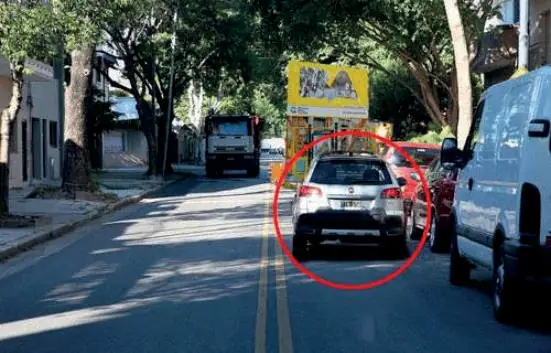
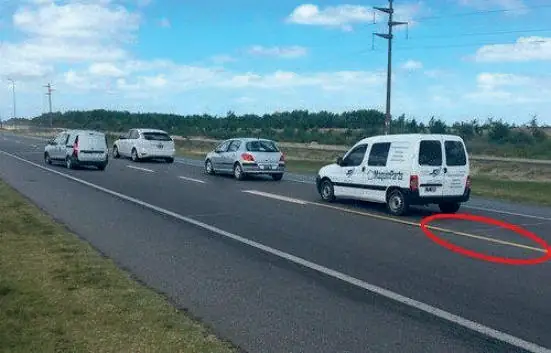
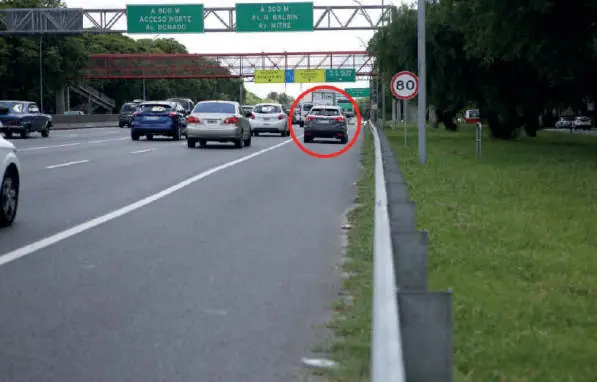
40. Is the vehicle circled in red driving correctly?El vehículo señalado con un círculo rojo, ¿circula correctamente?
AYes, because lights must be on on this road.Sí, porque en esta vía las luces deben estar encendidas.
BYes, because it keeps a safe distance from the other vehicles.Sí, ya que mantiene una distancia prudencial respecto del resto de los vehículos.
CNo, because it is driving on the shoulder.No, dado que está circulando por la banquina.Correct answer
Classes A and B. Official question bank, p. 120.
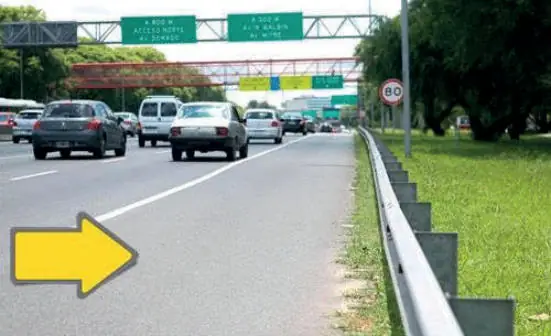
41. A vehicle may drive on the strip alongside the roadway shown in the image only when traffic is completely congested.Un vehículo podrá circular por la franja paralela a la calzada, indicada en la imagen, sólo cuando el flujo vehicular esté absolutamente congestionado.
ATrue.Verdadero.
BFalse.Falso.Correct answer
Classes A and B. Official question bank, p. 120.
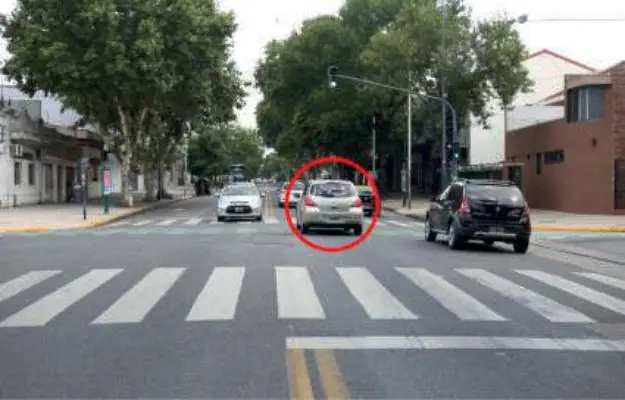
42. The indicated vehicle is allowed to turn left at this crossing, which has no traffic lights.El vehículo señalizado tiene permitido girar a la izquierda en este cruce que no tiene semáforo.
ATrue.Verdadero.
BFalse.Falso.Correct answer
Classes A and B. Official question bank, p. 121.
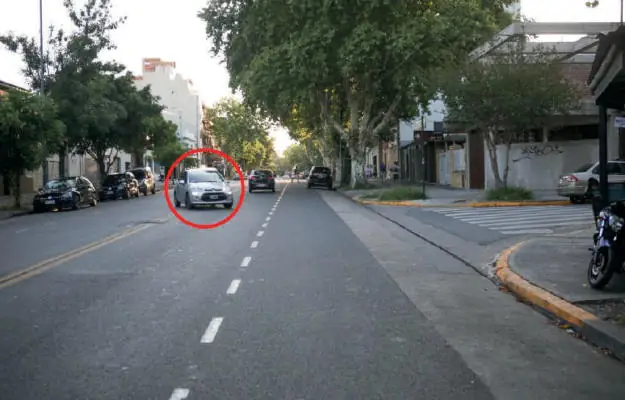
43. The vehicle circled in red wanted to turn right but went straight on by mistake, so:El vehículo con un círculo de color rojo quería girar a la derecha y, por error continuó en línea recta, de modo que:
AIt may reverse, since it only has a short way to go, and make the turn.Puede circular marcha atrás, porque es un tramo corto el que tiene que recorrer, y efectuar el giro.
BIt may make a U-turn to go the opposite way and then make the planned turn.Puede dar la vuelta en U para tomar el sentido contrario y así efectuar el giro programado.
CBoth answers, A and B, are incorrect.Ambas respuestas, A y B, son incorrectas.Correct answer
Classes A and B. Official question bank, p. 121.
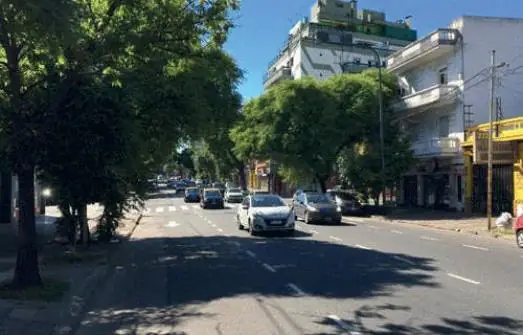
44. Under the general rules, what is the minimum speed allowed on this street?Según las normas generales, ¿cuál es la velocidad mínima permitida en esta calle?
A30 km/h.30 km/h.
B40 km/h.40 km/h.
C20 km/h.20 km/h.Correct answer
Classes A and B. Official question bank, p. 122.
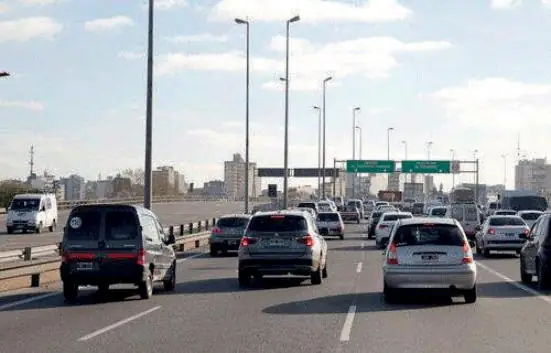
45. Under the general rules, what is the speed limit for a private car on this avenue?Según las normas generales, ¿cuál es la velocidad máxima permitida para un automóvil particular en esta avenida?
A40 km/h.40 km/h.
B70 km/h.70 km/h.
C60 km/h.60 km/h.Correct answer
Classes A and B. Official question bank, p. 123.
46. What is the speed limit for a private car on this section of the avenue?¿Cuál es la velocidad máxima permitida para un automóvil particular en este tramo de la avenida?
A60 km/h.60 km/h.
B50 km/h.50 km/h.
C40 km/h.40 km/h.Correct answer
Classes A and B. Official question bank, p. 123.
47. When driving on a highway at the speed limit, you may exceed it only while overtaking.Al circular por una ruta a la velocidad máxima permitida sólo se está habilitado a superarla en el momento del sobrepaso.
ATrue.Verdadero.
BFalse.Falso.Correct answer
Classes A and B. Official question bank, p. 124.
48. What is the speed limit on this section of the street?¿Cuál es la velocidad máxima permitida en este tramo de calle?
A40 km/h.40 km/h.
B20 km/h.20 km/h.Correct answer
C30 km/h.30 km/h.
Classes A and B. Official question bank, p. 124.
49. When you intend to leave a motorway or expressway, when must you slow down?Al pretender abandonar una autopista o semiautopista, ¿cuándo se debe reducir la velocidad?
AShortly before leaving it.Poco antes de abandonar la misma.
BOnce you have entered the deceleration lane.Cuando se haya entrado en el carril de desaceleración.Correct answer
CWhen you enter the new road.Cuando se ingresa a la nueva vía de circulación.
Classes A and B. Official question bank, p. 125.
50. Under National Law No. 24.449, as a general rule, what is the minimum speed allowed on expressways?Según la Ley Nacional N º 24.449, en carácter general, ¿cuál es la velocidad mínima permitida en las semiautopistas?
A40 km/h.40 km/h.Correct answer
B50 km/h.50 km/h.
C60 km/h.60 km/h.
Classes A and B. Official question bank, p. 125.
51. What is known as a safe (cautionary) speed?¿Qué se conoce como velocidad precautoria?
AA speed suited to the circumstances (within the set limits) that lets you keep full control of the vehicle without creating risk.A la velocidad adecuada a las circunstancias (dentro de los límites establecidos) que permite mantener el total dominio del vehículo sin generar riesgo.Correct answer
BDriving at the minimum speed set for a road.La circulación a la velocidad mínima establecida para una vía.
CDriving at no more than 30 km/h on streets and 45 km/h on avenues.La circulación a no más de 30 km/h en calles y de 45 km/h en avenidas.
Classes A and B. Official question bank, p. 125.
52. What is the "following distance" (distancia de seguridad)?¿A qué se denomina “distancia de seguridad”?
AThe minimum distance you must keep from the vehicle ahead so as to have more time to react and not hit it if it brakes suddenly.A la distancia mínima que se debe mantener con el vehículo que circula adelante para tener un mayor margen de reacción y en caso de frenada repentina no se colisione con él.Correct answer
BThe distance you must keep from the vehicle in the parallel lane in order to overtake safely.A la distancia que se debe mantener con el vehículo que circula en el carril paralelo, para realizar un sobrepaso seguro.
CThe distance the vehicle travels from when the driver perceives a hazard until they apply the brake.A la distancia que recorre el vehículo desde que el conductor percibe una situación de peligro hasta que acciona el freno.
Classes A and B. Official question bank, p. 126.
53. What is the "minimum following distance" vehicle A must keep from vehicle B?¿Cuál es la “distancia mínima de seguridad” a la que debe circular el vehículo A con respecto al B?
AA gap of two seconds.A una diferencia de dos segundos.Correct answer
BA distance of 2 meters.A una distancia de 2 metros.
CNone is set. It is only prohibited to drive right behind without leaving any distance.No existe una determinada. Sólo está prohibido circular inmediatamente detrás, sin dejar distancia.
Classes A and B. Official question bank, p. 126.
54. What is "reaction time"?¿A qué se denomina “tiempo de reacción”?
AThe time from starting a maneuver until finishing it.Al tiempo que pasa desde que se empieza una maniobra hasta que se termina.
BThe time from starting the vehicle until starting to drive.Al tiempo que pasa desde que se enciende el vehículo hasta que se empieza a circular.
CThe time from noticing a risky situation until making a decision.Al tiempo que pasa desde que se advierte una situación de riesgo hasta que se toma una decisión.Correct answer
Classes A and B. Official question bank, p. 127.
55. What is "reaction distance"?¿A qué se denomina “distancia de reacción”?
AThe distance a vehicle travels until it stops.A la distancia que recorre un vehículo hasta su detención.
BThe distance a vehicle must keep from another in order to maneuver.A la distancia que debe guardar un vehículo, respecto de otro, para poder maniobrar.
CThe distance a vehicle travels from when the driver perceives a hazard until they make a decision.A la distancia que recorre un vehículo desde que el conductor percibe un peligro hasta que toma una decisión.Correct answer
Classes A and B. Official question bank, p. 127.
56. Driving below the minimum speed limit can cause incidents.Circular por debajo del límite mínimo de velocidad puede causar incidentes.
ATrue.Verdadero.Correct answer
BFalse.Falso.
Classes A and B. Official question bank, p. 127.
57. What is the relationship between speed and the driver's field of vision?¿Qué relación existe entre la velocidad y el campo visual del conductor?
AThe higher the speed, the narrower the field of vision.A mayor velocidad, menor campo visual.Correct answer
BThe lower the speed, the narrower the field of vision.A menor velocidad, menor campo visual.
CThe higher the speed, the wider the field of vision.A mayor velocidad, mayor campo visual.
Classes A and B. Official question bank, p. 128.
58. Speeding...Los excesos de velocidad...
ANowadays plays hardly any part in incidents, thanks to vehicle safety.En la actualidad apenas tienen incidencia en los incidentes, debido a la seguridad de los vehículos.
BCauses most incidents only on two-way roads.Son responsables de la mayoría de los incidentes solamente en vías de doble sentido.
CCauses most fatal incidents, whatever the road.Son responsables de la mayoría de los incidentes fatales cualquiera sea la vía de circulación.Correct answer
Classes A and B. Official question bank, p. 128.
59. Driving at a steady speed within the limits set by law not only minimizes the chances of causing a road crash but can also optimize a vehicle's fuel consumption.Circular a velocidad constante y dentro de los límites establecidos por la Ley, además de minimizar las posibilidades de provocar un siniestro vial, puede optimizar el consumo de combustible en un vehículo.
ATrue.Verdadero.Correct answer
BFalse.Falso.
Classes A and B. Official question bank, p. 128.
60. Driving faster than the safe (cautionary) speed increases the chances of a road crash being more serious.Circular a mayor velocidad de la precautoria implica que aumenten las posibilidades de que un siniestro vial sea más grave.
ATrue.Verdadero.Correct answer
BFalse.Falso.
Classes A and B. Official question bank, p. 128.
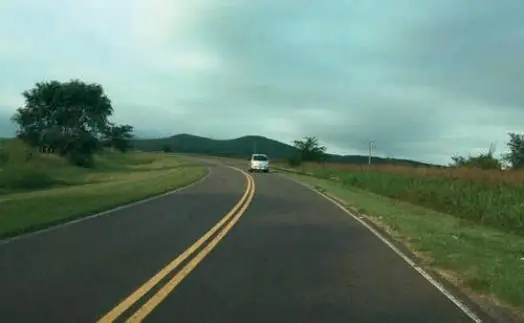
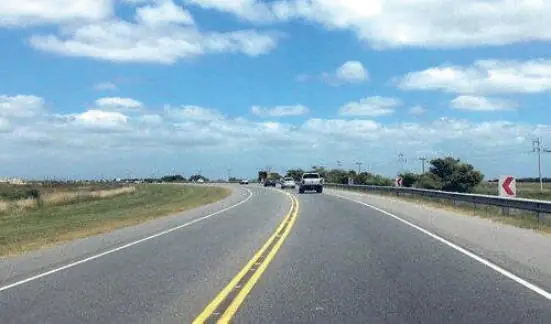
61. What is the most suitable way to drive a vehicle on this section of the highway?¿Cuál es la manera más adecuada de conducir un vehículo en este tramo de la ruta?
AGradually speed up before entering the bend.Aumentar la velocidad gradualmente antes de ingresar en la curva.
BSlow down before entering the bend.Desacelerar antes de ingresar a la curva.Correct answer
CKeep the same speed before the bend and accelerate while going through it.Mantener la misma velocidad antes de la curva y acelerar mientras se circula en ella.
Classes A and B. Official question bank, p. 128.
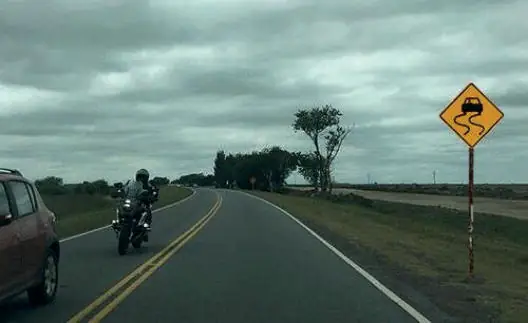
62. If, while driving on a highway, the vehicle accidentally leaves the roadway, it is advisable to:Si al circular por ruta, el vehículo sale involuntariamente de la calzada, es recomendable:
AUse the handbrake.Usar el freno de mano.
BSlow down (without braking).Desacelerar (no frenar).Correct answer
CPress hard on the brake pedal.Accionar fuertemente el pedal de freno.
Classes A and B. Official question bank, p. 129.
63. If you see this sign while driving, you must…Si ve esta señal mientras conduce, usted debe…
AReduce the vehicle's speedReducir la velocidad del vehículoCorrect answer
BIncrease the vehicle's speedIncrementar la velocidad del vehículo
CTurn left and then rightDar vuelta a la izquierda y después a la derecha
Classes A and B. Official question bank, p. 129.
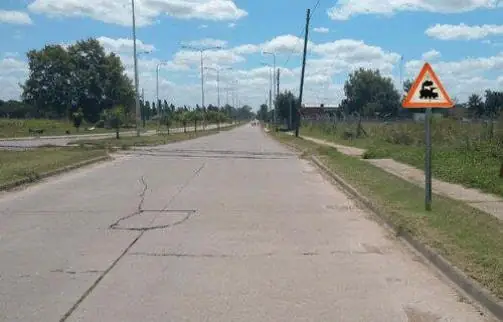
64. If you come across this sign while driving on a highway, what should you do?Si al circular en ruta se encuentra con esta señal, ¿qué conducta debe seguir?
ASlow down and watch out for approaching trains.Se debe disminuir la velocidad y prestar atención a la posible aproximación de trenes.Correct answer
BKeep the same speed unless a train actually approaches.Se continúa con la misma velocidad, salvo que se haga efectiva la aproximación del tren.
CWarn the other drivers to watch out for approaching trains by turning on the hazard lights.Se indica al resto de los conductores, la precaución sobre la aproximación de trenes, colocando balizas.
Classes A and B. Official question bank, p. 130.
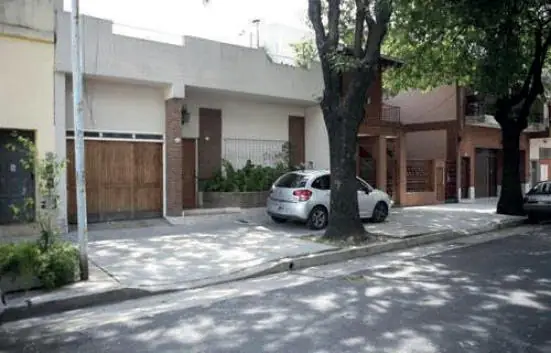
65. Is the vehicle in the image committing an offense?¿El vehículo de la imagen se encuentra en infracción?
AYes, unless the owner of the vehicle is also the owner of the house.Sí, salvo que el propietario del vehículo sea el mismo que el de la vivienda.
BNo, since there is enough room for pedestrians to pass.No, ya que hay espacio suficiente para el paso del peatón.
CBoth answers, A and B, are incorrect.Ambas respuestas, A y B, son incorrectas.Correct answer
Classes A and B. Official question bank, p. 130.
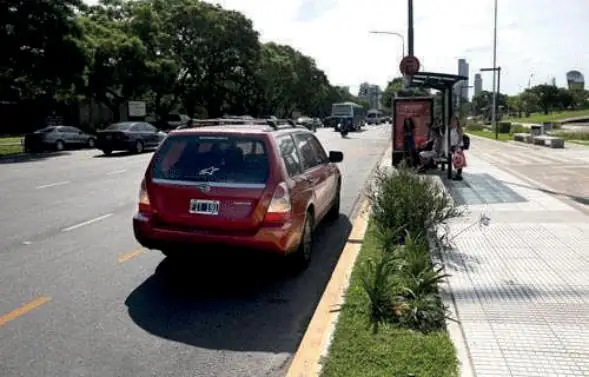
66. Is the vehicle with the universal disability sticker shown in this image committing an offense?El vehículo con la oblea universal de discapacidad que se muestra en esta imagen, ¿se encuentra en infracción?
ANo, since with the universal disability sticker it may park freely, and so it may park here.No, ya que al portar la oblea universal de discapacidad tiene libre estacionamiento y por ello puede estacionar en este lugar.
BYes. All vehicles are prohibited from parking in this area because it puts passengers and pedestrians at risk.Sí. Todo vehículo tiene prohibido estacionar en este sector ya que pone en riesgo a pasajeros y peatones.Correct answer
Classes A and B. Official question bank, p. 131.
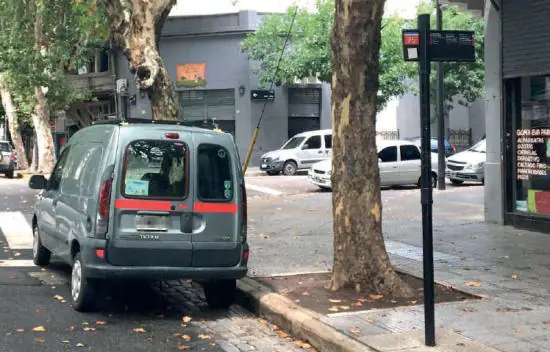
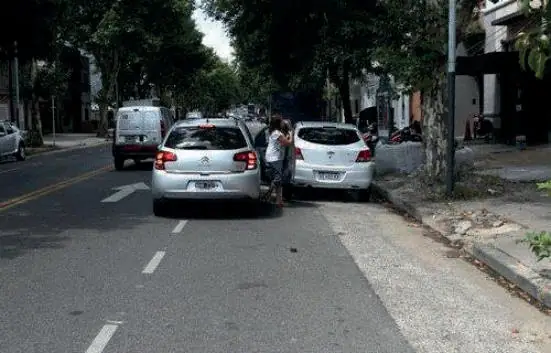
67. Is it correct to stop the vehicle in this area?¿Es correcta la detención del vehículo en este sector?
AYes, since it has its hazard lights on.Sí, ya que se encuentra con balizas encendidas.
BYes, because only parking is prohibited.Sí, porque sólo está prohibido el estacionamiento.
CNo, since both stopping and parking are prohibited in this area.No, ya que tanto la detención como el estacionamiento en este sector se encuentra prohibido.Correct answer
Classes A and B. Official question bank, p. 132.
68. Which line should you use as a reference when stopping or parking near a corner?¿Qué línea debe tomarse de referencia cuando se detiene o estaciona en proximidad de una esquina?
AThe pedestrian line.La línea peatonal.
BThe imaginary line extending the chamfered corner (ochava).La línea imaginaria de prolongación de ochava.Correct answer
CThe building line of the cross street.La línea de edificación transversal.
Classes A and B. Official question bank, p. 132.
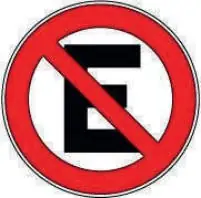
69. As a general rule, at this sign, is it allowed to stop to let passengers on or off?Como norma general, frente a esta señal, ¿está permitido detenerse para el ascenso o descenso de pasajeros?
ANo. Parking and stopping are prohibited.No. Está prohibido estacionar y detenerse.
BYes. Only parking is prohibited, not stopping.Sí. Sólo está prohibido estacionar pero no detenerse.Correct answer
CIt depends on the time of day you want to stop.Según la hora en que quiera realizarse la detención.
Classes A and B. Official question bank, p. 132.
70. Turning on the hazard lights lets you double-park for a while, between 2 and 5 minutes.Encender las balizas permite detenerse en doble fila por un lapso de tiempo, entre 2 y 5 minutos.
ATrue.Verdadero.
BFalse.Falso.Correct answer
Classes A and B. Official question bank, p. 133.
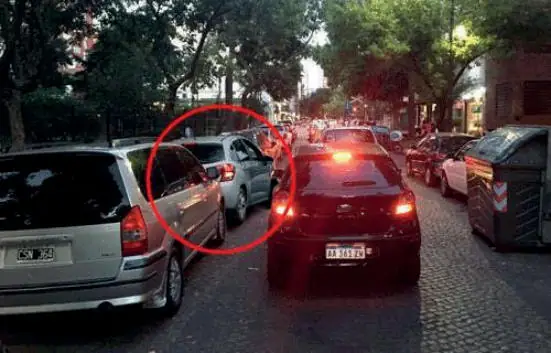
71. Is the action shown in the following image allowed?¿Está permitida la acción que se presenta en la siguiente imagen?
AYes, because the hazard lights are on and it does not need to stay more than 5 minutes for a passenger to get out.Sí, porque tiene las balizas encendidas y no necesita permanecer más de 5 minutos para que descienda un pasajero.
BYes, because double parking is allowed for passengers getting on and off.Sí, porque la doble fila está permitida cuando se trata de ascenso y descenso de pasajeros.
CNo, since double parking is allowed only as a stop just before parking.No, ya que la doble fila está permitida sólo como detención previa a la maniobra de estacionamiento.Correct answer
Classes A and B. Official question bank, p. 133.
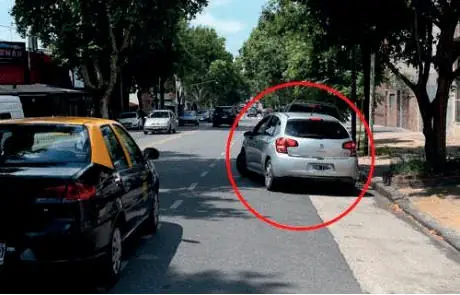
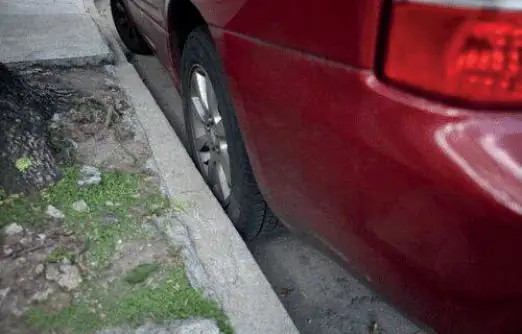
72. Is this vehicle parked correctly?¿Este vehículo se encuentra bien estacionado?
AYes. Since the curb is not painted yellow, it may park and stop there.Sí. Al no estar el cordón pintado de amarillo, está habilitado a estacionarse y detenerse.
BYes. Since the curb is not painted red, it may park but not stop there.Sí. Al no estar el cordón pintado de rojo, está habilitado a estacionarse pero no a detenerse.
CNo, because it should be farther from the curb (20 cm away from it).No, porque debería estar más alejado del cordón (a 20 cm de él).Correct answer
Classes A and B. Official question bank, p. 134.
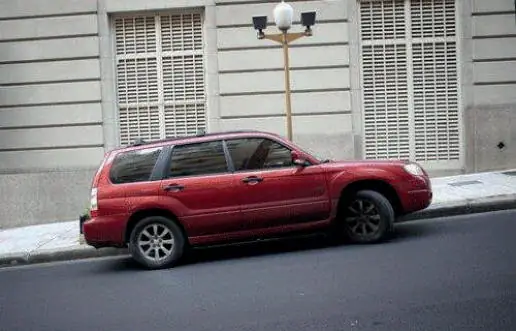
73. What precautions must you take when leaving a vehicle parked in this situation?¿Qué precauciones se deben tener al dejar estacionado un vehículo en esta situación?
ATurn the wheels toward the curb and leave it in reverse gear, or in park if it has an automatic transmission.Orientar las ruedas hacia el cordón de la vereda y dejar la marcha hacia atrás o en posición de estacionamiento en el caso de tener caja automática.
BTurn the wheels toward the center of the roadway and leave it in first gear, or in park if it has an automatic transmission.Orientar las ruedas hacia el centro de la calzada y dejar la marcha en primera o en posición de estacionamiento en el caso de tener caja automática.Correct answer
CKeep the wheels parallel to the curb and leave it out of gear, or in park if it has an automatic transmission.Orientar las ruedas paralelas al cordón y sin cambio o en posición de estacionamiento en el caso de tener caja automática.
Classes A and B. Official question bank, p. 134.
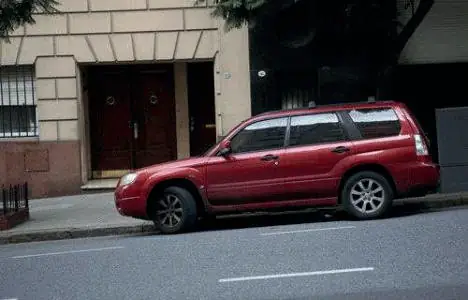
74. What precautions must you take when leaving a vehicle parked in this situation?¿Qué precauciones se deben tener al dejar estacionado un vehículo en esta situación?
ATurn the wheels toward the curb and leave it in reverse gear, or in park if it has an automatic transmission.Orientar las ruedas hacia el cordón de la vereda y dejar la marcha hacia atrás o en posición de estacionamiento en el caso de tener caja automática.Correct answer
BTurn the wheels toward the center of the roadway and leave it in first gear, or in park if it has an automatic transmission.Orientar las ruedas hacia el centro de la calzada y dejar la marcha en primera o en posición de estacionamiento en el caso de tener caja automática.
CKeep the wheels parallel to the curb and leave it out of gear, or in park if it has an automatic transmission.Orientar las ruedas paralelas al cordón y sin cambio o en posición de estacionamiento en el caso de tener caja automática.
Classes A and B. Official question bank, p. 135.
75. Are you allowed to stop a vehicle at this place?¿Se está habilitado a detener un vehículo en este lugar?
AYes, as long as it does not obstruct traffic.Sí, siempre y cuando no entorpezca la circulación.
BNo, the regulations prohibit parking and stopping.No, está prohibido estacionar y detenerse por normativa.Correct answer
CYes, unless a sign expressly prohibits it.Si, a menos que haya una señal que lo prohíba expresamente.
Classes A and B. Official question bank, p. 136.
76. Is reversing allowed in the Province of Buenos Aires?¿Está permitido circular marcha atrás en Provincia de Buenos Aires?
ANo, except to park, to enter or leave a garage (when there is no other option) or to get around an obstacle.No, salvo que se realice para estacionar, entrar o salir de un garaje (cuando no exista otra posibilidad) o salvar algún obstáculo.Correct answer
BYes, it can be done at any time, but only for a few meters.Sí, se puede realizar en cualquier ocasión pero el trayecto para circular debe ser de pocos metros.
CYes, as long as it is done before reaching the middle of the block and making sure not to endanger other vehicles.Sí, siempre que se realice antes de llegar a la mitad de la cuadra y asegurándose de no poner en riesgo al resto de los vehículos.
Classes A and B. Official question bank, p. 136.
77. When reversing, how far may a driver go?Cuando un conductor realiza marcha atrás, ¿qué distancia puede recorrer?
ANo more than half a block.No debe superar la mitad de una cuadra.
BNo more than 20 meters.No más de 20 metros.
CThe minimum distance needed, as long as it is a parking maneuver.El recorrido mínimo e indispensable, siempre que se trate de una maniobra de estacionamiento.Correct answer
Classes A and B. Official question bank, p. 136.
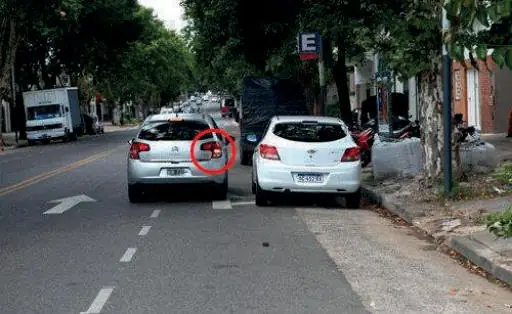
78. If the vehicle ahead of you is driving with these flashing lights on, what might the driver be indicating?Si el vehículo que lo precede, circula con estas luces intermitentes encendidas, ¿qué podría estar indicando el conductor?
AThat the vehicle is moving slowly.Que el vehículo circula lentamente.
BThat the vehicle is about to enter a garage or stop.Que el vehículo próximamente ingresará a un garage o se detendrá.Correct answer
CThat the vehicle will turn at the next intersection.Que el vehículo realizará un giro en la próxima intersección.
Classes A and B. Official question bank, p. 137.
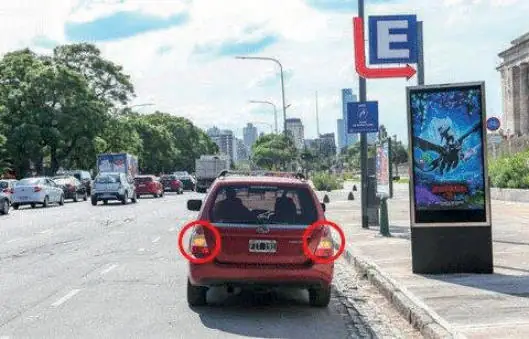
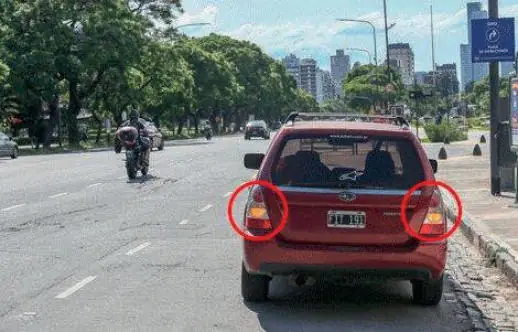
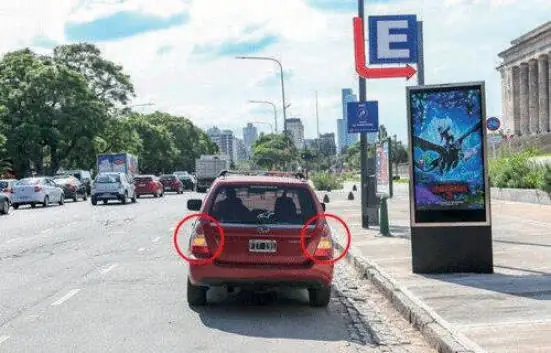
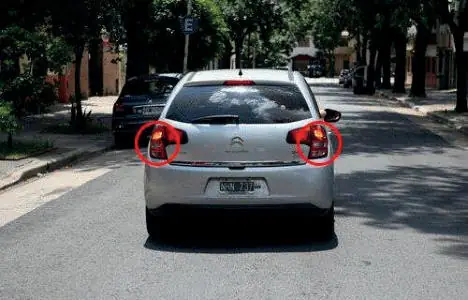
79. What does using this type of light indicate?¿Qué indica el uso de este tipo de luces?
AUsed separately, they announce maneuvers in advance.Cuando se utilizan por separado sirven para preanunciar maniobras.
BUsed together, they announce emergencies or that the vehicle is about to stop.Cuando se utilizan a la vez sirven para anunciar situaciones de emergencias o que se está por detener.
CBoth answers, A and B, are correct.Ambas respuestas, la A y la B, son correctas.Correct answer
Classes A and B. Official question bank, p. 137.
80. If the vehicle in the image is about to enter a garage, it is signaling its maneuver with the correct lights.Si el vehículo de la imagen se dispone a ingresar a un garaje, está anticipando su maniobra, utilizando las luces correctas.
ATrue.Verdadero.Correct answer
BFalse.Falso.
Classes A and B. Official question bank, p. 138.
81. If the vehicle in the image is about to enter a garage on its right, it is signaling its maneuver with the correct lights.Si el vehículo de la imagen se dispone a ingresar a un garaje ubicado a su derecha, está anticipando su maniobra utilizando las luces correctas.
ATrue.Verdadero.
BFalse.Falso.Correct answer
Classes A and B. Official question bank, p. 139.
82. How must a driver signal that they are entering a garage or parking lot?El ingreso hacia un garaje o estacionamiento, ¿cómo debe ser indicado por el conductor?
AWith the turn signal on the side they will enter.Con la luz de giro hacia el lado donde se irá a ingresar.
BWith the turn signal on the side opposite to where they will enter.Con la luz de giro hacia el lado opuesto donde se irá a ingresar.
CWith the hazard lights.Con las luces intermitentes (balizas).Correct answer
Classes A and B. Official question bank, p. 139.
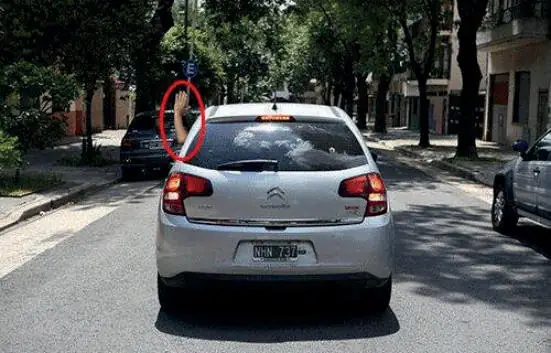
83. Are hand signals of this kind valid?¿Son válidas este tipo de señas?
AAs a complement to the hazard lights and/or in an emergency.Como acompañamiento al uso de balizas y/o en caso de emergencia.Correct answer
BNever.Nunca.
COnly when used on streets.Sólo cuando se utilicen en calles.
Classes A and B. Official question bank, p. 139.
84. If you are driving and are going to turn at an intersection, you must signal your maneuver with the corresponding turn signal at least...Si usted está conduciendo y va a girar al llegar a una intersección, debe anticipar su maniobra utilizando la luz de giro correspondiente por lo menos...
A20 meters before making the maneuver.20 metros antes de realizar la maniobra.
B10 meters before making the maneuver.10 metros antes de realizar la maniobra.
C30 meters before making the maneuver.30 metros antes de realizar la maniobra.Correct answer
Classes A and B. Official question bank, p. 140.
85. To turn correctly at an intersection, you must signal...Para realizar correctamente un giro en una intersección se debe indicar...
ABy sounding the horn.Tocando bocina.
BUsing the turn signal on the appropriate side, at least 30 meters before.Utilizando la luz de giro del lado correspondiente, al menos 30 metros antes.Correct answer
CUsing both turn signals, some meters before reaching the intersection.Utilizando ambos giros, metros antes de llegar a la intersección.
Classes A and B. Official question bank, p. 140.
86. Driving with the high beams on is prohibited in urban areas.Circular con la luz alta encendida está prohibido en zonas urbanas.
ATrue.Verdadero.Correct answer
BFalse.Falso.
Classes A and B. Official question bank, p. 140.
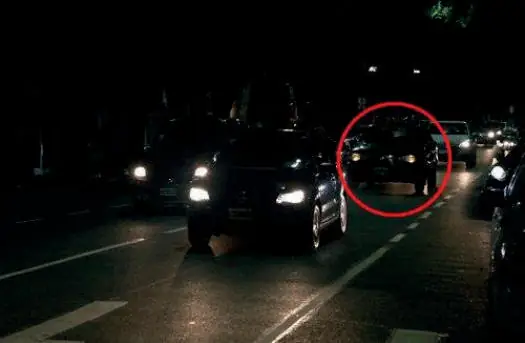
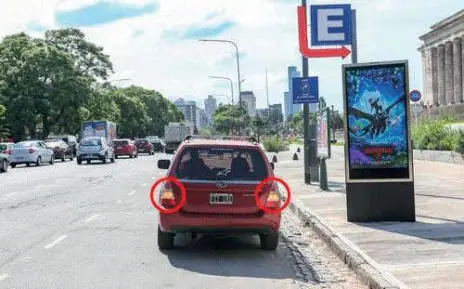
87. The vehicle circled in red is driving with the correct lights.El vehículo, señalado con un círculo rojo, circula utilizando las luces correctas.
ATrue.Verdadero.
BFalse.Falso.Correct answer
Classes A and B. Official question bank, p. 141.
88. Looking at this vehicle's lights, what do they tell you about its direction of travel?Al observar las luces de este vehículo, ¿qué significado tienen en cuanto al sentido de circulación?
AThat it is traveling in the same direction as me.Que está circulando en mí mismo sentido.Correct answer
BThat it is traveling in the opposite direction to me.Que está circulando en el sentido contrario al mío.
CThey do not show direction of travel; they mean it has broken down.No indican sentido de circulación sino que está descompuesto.
Classes A and B. Official question bank, p. 141.
89. What are these flashing lights for?¿Para qué sirven estas luces intermitentes?
ATo warn other drivers, in bad weather, that the vehicle is moving slowly.Para advertir a los demás conductores, frente a malas condiciones climáticas, que el vehículo circula a baja velocidad.
BTo signal and warn other drivers that the vehicle is stopped or about to stop, park or deal with an emergency.Para señalizar y advertir a los demás conductores que el vehículo se encuentra detenido o próximo a una maniobra de detención, estacionamiento o emergencia.Correct answer
CBoth answers, A and B, are correct.Ambas respuestas, A y B, son correctas.
Classes A and B. Official question bank, p. 142.
90. If, while driving on this road, you are forced to stop on the shoulder, which lights must you turn on?Si al circular por la siguiente arteria, se ve obligado a detener en la banquina, ¿qué luces debe colocar?
AHigh beams and turn signal.Luces altas y giro.
BThe required lights and the hazard lights.Luces reglamentarias y balizas.Correct answer
CFog lights.Luces antinieblas.
Classes A and B. Official question bank, p. 142.
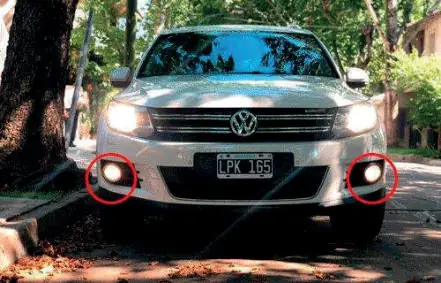
91. Is it allowed to fit additional lights to a private car?¿está permitido colocar a un automóvil particular luces adicionales?
AYou may add two fog lights and up to two raised brake lights.Está permitido el agregado de dos faros rompeniebla y de hasta dos faros elevados con luces de freno.Correct answer
BYes. You may add as many lights as you like, since the more lighting the vehicle has, the better the driver will see.Sí. Se puede agregar las luces que se deseen ya que cuanto más capacidad de iluminación tenga el vehículo, mejor visibilidad tendrá el conductor.
CNo, adding any kind of extra light is prohibited. Only the factory lights may be replaced if they are destroyed.No, está prohibido agregar cualquier tipo de luz adicional. Sólo se podrá reponer las que traiga de fábrica, en caso de destrucción.
Classes A and B. Official question bank, p. 142.
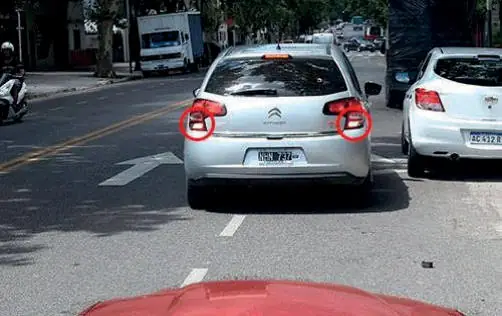
92. What does the color of the lit lights shown in the image mean?¿Qué significado tiene el color de las luces encendidas que se indican en la imagen?
ASince it is at the rear of the vehicle, the white color distinguishes it from the brake, position and turn lights.Al estar ubicada en la parte posterior del vehículo, el color blanco es para diferenciarla de las luces de freno, posición y giro.
BBeing white, it gives better vision when reversing at night or in poor visibility.Al ser de color blanco se obtiene mejor visión cuando la maniobra de retroceso se debe realizar de noche o en condiciones de poca visibilidad.
CIt shows the direction of travel. The white light means the vehicle is traveling in the opposite direction to the red vehicle behind it.Indica el sentido de circulación. La luz blanca significa que el vehículo circula en sentido contrario al del vehículo rojo que está detrás de él.Correct answer
Classes A and B. Official question bank, p. 143.
93. Besides providing light, a vehicle's lighting system gives information that allows vehicles, and pedestrians too, to communicate.El sistema de luces que posee un vehículo, además de iluminar, brinda información que permite la comunicación entre vehículos y también peatones.
ATrue.Verdadero.Correct answer
BFalse.Falso.
Classes A and B. Official question bank, p. 143.
94. What is "aquaplaning"?¿A qué se denomina “aquaplaning”?
AWhen a lot of rain falls.Cuando la cantidad de agua caída en una lluvia es abundante.
BThe loss of grip between tire and road due to a layer of water on the road surface that is greater than the tire tread can push away.A la pérdida de adherencia del neumático al piso a causa de la capa de agua acumulada en el pavimento, que es mayor a la cantidad que se puede expulsar a través de los dibujos de los neumáticos.Correct answer
CThe slippery state of the roadway after a drizzle.Al estado resbaladizo en el que se encuentra la calzada luego de una llovizna.
Classes A and B. Official question bank, p. 143.
95. Regarding speed in this situation, what should a driver consider?En cuanto a la velocidad frente a esta situación, ¿qué debería considerar un conductor?
AThey should drive at half the maximum speed set by law.Debería circular a la mitad de la velocidad máxima establecida por Ley.
BThey should adapt their speed to the weather and to the road they are on.Debería adecuar la velocidad de acuerdo a las condiciones climáticas y de dicha vía de circulación.Correct answer
CThe only thing they should do is respect the speed limit of the road they are on.Lo único que debería hacer es respetar es la velocidad máxima de la arteria por la que circula.
Classes A and B. Official question bank, p. 144.
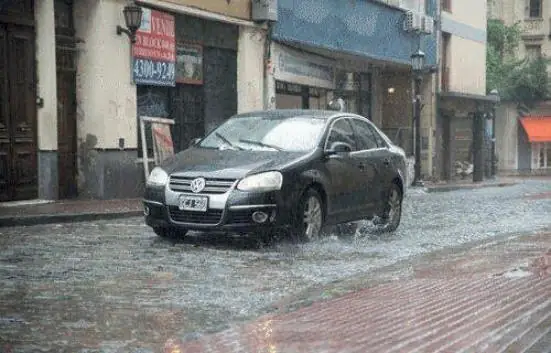
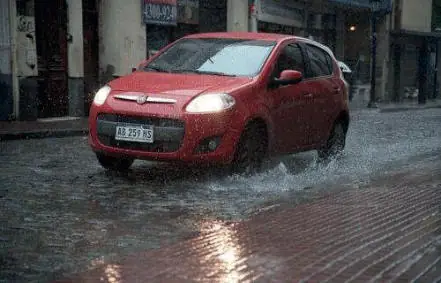
96. What is the effect shown in the following image called?¿Cómo se define el efecto que ocurre en la siguiente imagen?
AAquaplaning.Aquaplaning.Correct answer
BOff-tracking.Off tracking.
Classes A and B. Official question bank, p. 144.
97. When there is water on the road, you must slow down to avoid…Cuando hay agua en el camino, debe reducir su velocidad para evitar…
AWearing out the tires.Desgastar las llantas.
BOverheating the tires.Sobrecalentar las llantas.
CAquaplaning.El aquaplaning.Correct answer
Classes A and B. Official question bank, p. 145.
98. If the roadway is wet and there are puddles, can the brakes become less effective?Si la calzada está mojada y hay charcos, ¿pueden perder eficacia los frenos?
ANo, on the contrary, grip improves because the tires get cleaned.No, al contrario, se mejora la adherencia porque los neumáticos se limpian.
BYes, because when wet they may not work effectively.Sí, porque al mojarse pueden no funcionar eficazmente.Correct answer
CNo, because brakes are precisely what counteracts the effects of a slippery roadway.No, porque justamente los frenos sirven para contrarrestar los efectos de la calzada resbaladiza.
Classes A and B. Official question bank, p. 145.
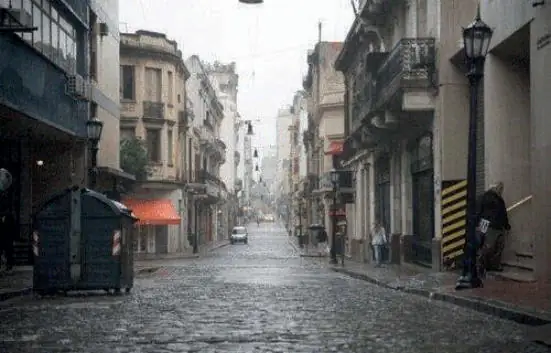
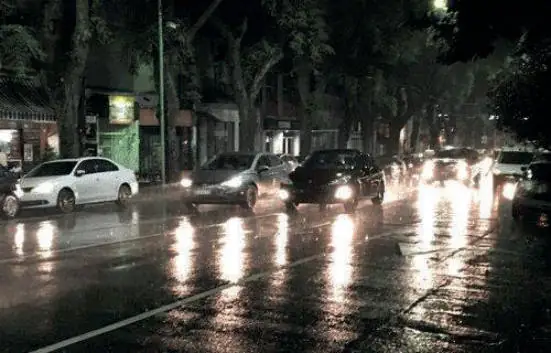
99. In this weather, must the low beams be turned on?Frente a esta condición climática, ¿se deben encender las luces bajas?
AYes, whenever visibility is reduced.Sí, siempre que está disminuida la visibilidad.Correct answer
BNo, because lights should only be used at night.No, porque las luces sólo deben utilizarse por la noche.
CYes, but only on highways.Sí, pero sólo en rutas.
Classes A and B. Official question bank, p. 145.
100. When driving for a long time in this weather…Al conducir por un largo lapso de tiempo y en esta condición climática…
AFatigue is less likely to set in, since attention increases.Es menos probable que aparezca la fatiga, ya que aumenta la atención.
BYou need to rest more often to avoid fatigue.Es necesario descansar con más frecuencia, para evitar la fatiga.Correct answer
CIt does not affect fatigue, as long as you keep a sensible speed.No influye en la aparición de fatiga, siempre y cuando se mantenga una velocidad prudente.
Classes A and B. Official question bank, p. 146.
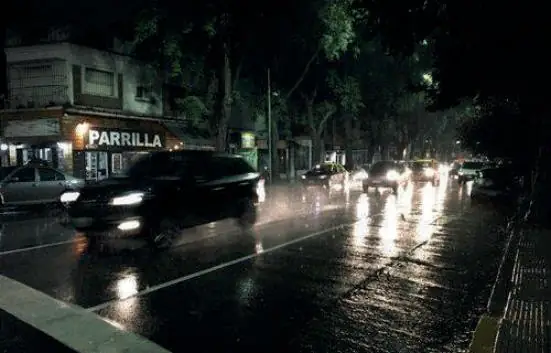
101. In this weather, is it advisable to increase the following distance and slow down?Bajo esta condición climática, ¿es recomendable aumentar la distancia de seguridad y reducir la velocidad?
ANo, the slower you go, the greater the share of water on the asphalt.No, al reducir la velocidad, mayor es la proporción de agua en el asfalto.
BYes, in the rain there is less grip.Sí, con lluvia la adherencia es menor.Correct answer
CNo. The following distance must always be the same.No. La distancia de seguridad debe ser siempre la misma.
Classes A and B. Official question bank, p. 147.
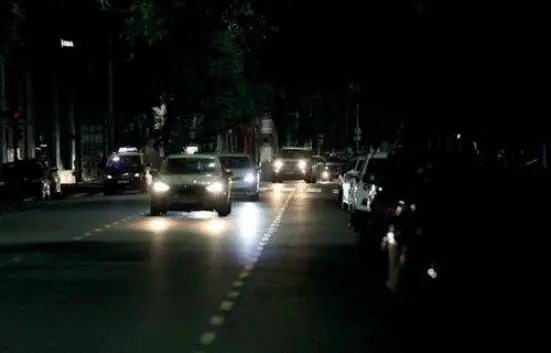
102. Driving at night increases the risk of having an incident.Conducir de noche aumenta el riesgo de sufrir un incidente.
ATrue.Verdadero.Correct answer
BFalse.Falso.
Classes A and B. Official question bank, p. 147.
103. When driving in this weather, to how much must the 2-second following distance rule be increased?Cuando conduce bajo esta condición climática, ¿a cuánto se debe incrementar la regla de 2 segundos en la distancia de seguridad?
ATo 4 seconds.A 4 segundos.Correct answer
BTo 3 seconds.A 3 segundos.
CTo 5 seconds.A 5 segundos.
Classes A and B. Official question bank, p. 147.
104. When driving on a roadway in these conditions, the braking distance will be...Al conducir sobre una calzada en estas condiciones, la distancia de frenado será...
AThe same as when the roadway is dry.Igual que cuando la calzada se encuentra seca.
BShorter than when the roadway is dry.Menor que cuando la calzada se encuentra seca.
CLonger than when the roadway is dry.Mayor que cuando la calzada se encuentra seca.Correct answer
Classes A and B. Official question bank, p. 148.
105. In these conditions, can incorrectly adjusted low beams cause glare?En estas condiciones, ¿una incorrecta regulación de la altura de las luces bajas puede producir encandilamiento?
AYes, because this effect is caused by sudden changes in light intensity.Sí, porque este efecto se produce por cambios bruscos en la intensidad de la luz.Correct answer
BNo, because this effect is caused only by using high beams.No, porque este efecto se produce sólo por el uso de la luz alta.
CNo, because this effect occurs on poorly lit highways.No, porque este efecto se produce en rutas con poca iluminación.
Classes A and B. Official question bank, p. 149.
106. What is the speed limit in this situation?¿Cuál es el límite de velocidad máxima en esta situación?
A60 km/h.60 km/h.Correct answer
B80 km/h.80 km/h.
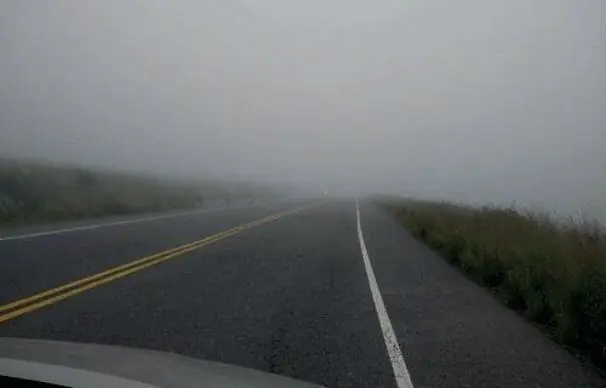
C40 km/h.40 km/h.
Classes A and B. Official question bank, p. 149.
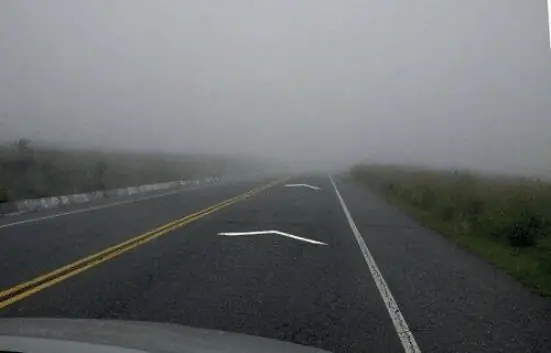
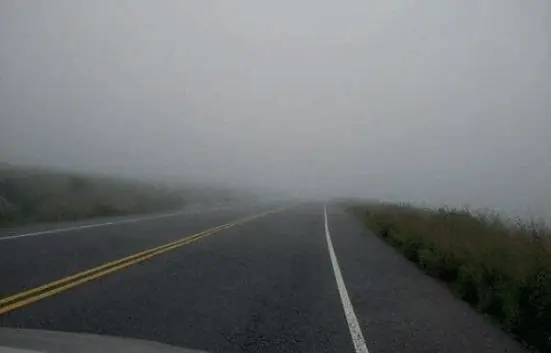
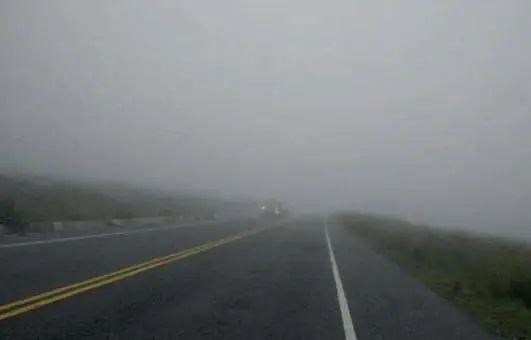
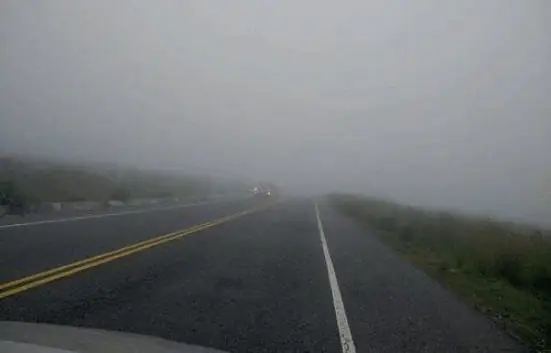
107. In the following situation, what is it advisable to do?Ante la siguiente situación, ¿qué es lo que se recomienda hacer?
AUse the fog lights, which is enough because it extends the driver's visibility.Utilizar las luces rompeniebla, lo cual es suficiente porque permite ampliar la visibilidad del conductor.
BDrive with both hands on the wheel, slow down, increase the distance between vehicles and use the appropriate vehicle lights.Conducir con ambas manos en el volante, reducir la velocidad, aumentar la distancia entre vehículos y utilizar las luces correspondientes del vehículo.Correct answer
CStop on the shoulder until the fog bank lifts.Detenerse en la banquina hasta que levante el banco de niebla.
Classes A and B. Official question bank, p. 150.
108. In this weather, which lights must you use to drive on this highway?Con estas condiciones climáticas, ¿qué luces debe utilizar para poder circular en esta ruta?
AThe high beams, for the whole trip while the fog lasts.Las luces altas, durante todo el recorrido mientras continúe la niebla.
BThe low beams and the fog lights (if fitted).Las luces bajas y las rompeniebla (en el caso de tenerlas).Correct answer
CThe low beams, the fog lights (if fitted) and the hazard lights.Las luces bajas, las rompenieblas (en caso de tenerlas) y las balizas.
Classes A and B. Official question bank, p. 150.
109. When must these lights be used?¿En qué caso deberán utilizarse estas luces?
AOnly at night and on an unpaved road.Únicamente de noche y por una vía sin asfaltar.
BOnly on roads without a shoulder.Sólo por vías sin banquina.
COn roads affected by fog, at any time of day.En vías afectadas por niebla, en cualquier horario.Correct answer
Classes A and B. Official question bank, p. 151.
110. If you are on this road in this weather, is it best to stop on the shoulder?Si se encuentra en esta vía bajo estas condiciones climáticas, ¿lo más conveniente es detenerse en la banquina?
AYes, when the fog bank is very dense.Sí, cuando el banco de niebla es muy denso.
BYes, as long as you turn on the high beams to be more visible.Sí, siempre y cuando se coloquen las luces altas para ser más visibles.
CNo. If you cannot keep driving, you must get as far away from the roadway and the shoulder as possible.No. Si no hay posibilidad de circular, debe alejarse lo más posible de la calzada y de la banquina.Correct answer
Classes A and B. Official question bank, p. 151.
111. As a risk factor, fog changes…La niebla, como factor de riesgo, produce modificaciones en…
AThe driver's field of vision, their perception of the surroundings, the vehicle's lighting capacity and tire grip.El campo visual del conductor, su percepción del entorno, la capacidad lumínica del vehículo y la adherencia de las cubiertas.Correct answer
BThe driver's field of vision and the vehicle's lighting capacity.El campo visual del conductor y la capacidad lumínica del vehículo.
CIt only affects the vehicle's lighting capacity.Sólo afecta la capacidad lumínica del vehículo.
Classes A and B. Official question bank, p. 152.
112. Hazard lights must be used while driving in these weather conditions.Se deben utilizar balizas mientras se conduce bajo estas condiciones climáticas.
ATrue.Verdadero.
BFalse.Falso.Correct answer
Classes A and B. Official question bank, p. 152.
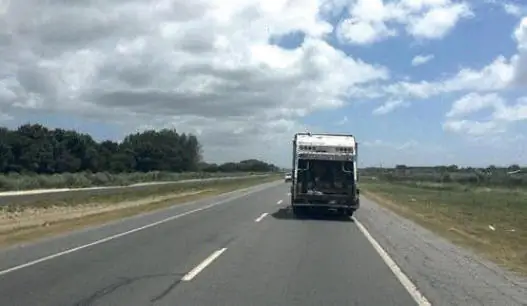
113. In strong winds, it is advisable to overtake a truck without too great a difference in speed.En condiciones de viento fuerte, es recomendable realizar los sobrepasos de un camión con una diferencia de velocidad no demasiado elevada.
ATrue.Verdadero.Correct answer
BFalse.Falso.
Classes A and B. Official question bank, p. 153.
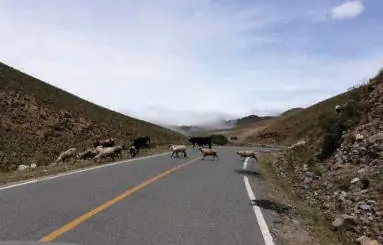
114. If you are driving on the highway and see this situation, you must…Si ud. circula por la ruta y observa esta situación, debe…
ASpeed up to get past the animal quickly.Aumentar la velocidad para sobrepasar al animal rápidamente.
BUse the horn to scare the animal away and keep your speed.Usar la bocina para ahuyentar al animal y mantener su velocidad.
CSlow down and stop if necessary.Reducir la velocidad y si es necesario detenerse.Correct answer
Classes A and B. Official question bank, p. 153.
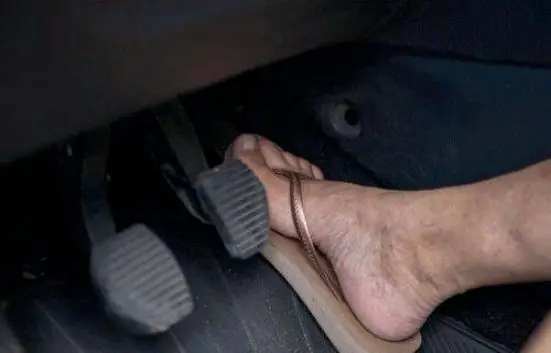
115. Is it safe to drive in this type of footwear?¿Es seguro conducir con este tipo de calzado?
AIt makes no difference as long as they do not slip.Es indistinto mientras que no resbalen.
BDriving can only be affected on long trips.Sólo puede verse afectada la conducción en viajes largos.
CNo, only footwear that is secured to the foot makes driving safe.No, sólo un calzado sujeto al pie brinda seguridad en la conducción.Correct answer
Classes A and B. Official question bank, p. 154.
116. If a vehicle's driver is driving with the hazard lights on, sounding the horn repeatedly, and the passenger is holding their arm out waving a handkerchief, what are they indicating?Si el conductor de un vehículo circula con las balizas encendidas, toca repetidamente la bocina y el acompañante saca el brazo agitando un pañuelo. ¿Qué está indicando?
AThat the vehicle has a breakdown.Que el vehículo tiene un desperfecto.
BThat it is an emergency: they are carrying a seriously ill person.Que se encuentra en emergencia, transportando a una persona en grave estado de salud.Correct answer
CBoth answers, A and B, are correct.Ambas respuestas, la A y la B, son correctas.
Classes A and B. Official question bank, p. 154.
117. If, while driving on a motorway, you notice that the vehicle has a serious fault but can still keep going, what is advisable in such cases?Si al conducir por una autopista advierte que el vehículo presenta una falla grave, pero a pesar de ella puede seguir circulando; ¿qué se recomienda hacer en estos casos?
AKeep driving on the motorway, but in the deceleration lane, which is meant for slow vehicles.Seguir circulando por la autopista pero por el carril de desaceleración, destinado a los vehículos lentos.
BDrive in the right lane and leave the motorway at the next exit to call for roadside assistance.Circular por el carril derecho y en la próxima salida abandonar la autopista para llamar al auxilio del vehículo.Correct answer
CContinue at low speed, staying in your lane, whichever it is.Continuar a baja velocidad, manteniéndose en el carril, independientemente de cuál fuera.
Classes A and B. Official question bank, p. 154.
118. On this type of road, is it allowed to tow a broken-down car with your private car?En este tipo de vía, ¿está permitido remolcar con su automóvil particular a otro que se encuentra descompuesto?
AYes, since it is risky for it to stay stopped there, but only as far as the nearest place where it can be left.Sí, ya que es riesgoso que quede detenido pero sólo puede hacerse hasta el lugar más próximo donde pueda quedar inmovilizado.
BYes, but only if I hold a license that authorizes driving vehicles with a trailer.Sí, pero sólo si soy titular de una licencia que autoriza a conducir vehículos con remolque.
CNo, only vehicles authorized for that purpose may do so.No, sólo pueden hacerlo los vehículos autorizados a tal fin.Correct answer
Classes A and B. Official question bank, p. 155.
119. What is defensive driving?¿A qué se denomina conducción preventiva?
AChecking that the vehicle works properly, and checking fuel, oil and tire pressure.A controlar el buen funcionamiento del vehículo, los niveles de combustible, aceite e inflado de neumáticos.
BDriving cautiously, taking responsibility for your actions and anticipating what others will do.A adoptar conductas cautelosas al conducir, que consideran la responsabilidad por los actos que se llevan a cabo y a anticipar la conducta de los demás.Correct answer
CTaking road safety courses every six months.A realizar cursos viales cada seis meses.
Classes A and B. Official question bank, p. 155.
120. Defensive or anticipatory driving assumes that we can all make mistakes, despite knowing the rules and despite government awareness campaigns.Una conducción preventiva o anticipada prevé que todos podemos cometer errores, a pesar de conocer la normativa y la concientización gubernamental.
ATrue.Verdadero.Correct answer
BFalse.Falso.
Classes A and B. Official question bank, p. 155.
121. What is efficient driving?¿A qué se denomina conducción eficiente?
ADriving that reduces road safety risks and lowers fuel consumption.A una conducción que disminuya los riesgos de seguridad vial y logre un menor consumo de combustible.Correct answer
BDriving that gets you to your destination in the shortest possible time.A una conducción que logre llegar a destino en el menor tiempo posible.
CDriving at the same speed for the whole trip.A una conducción que mantenga durante todo el trayecto la misma velocidad.